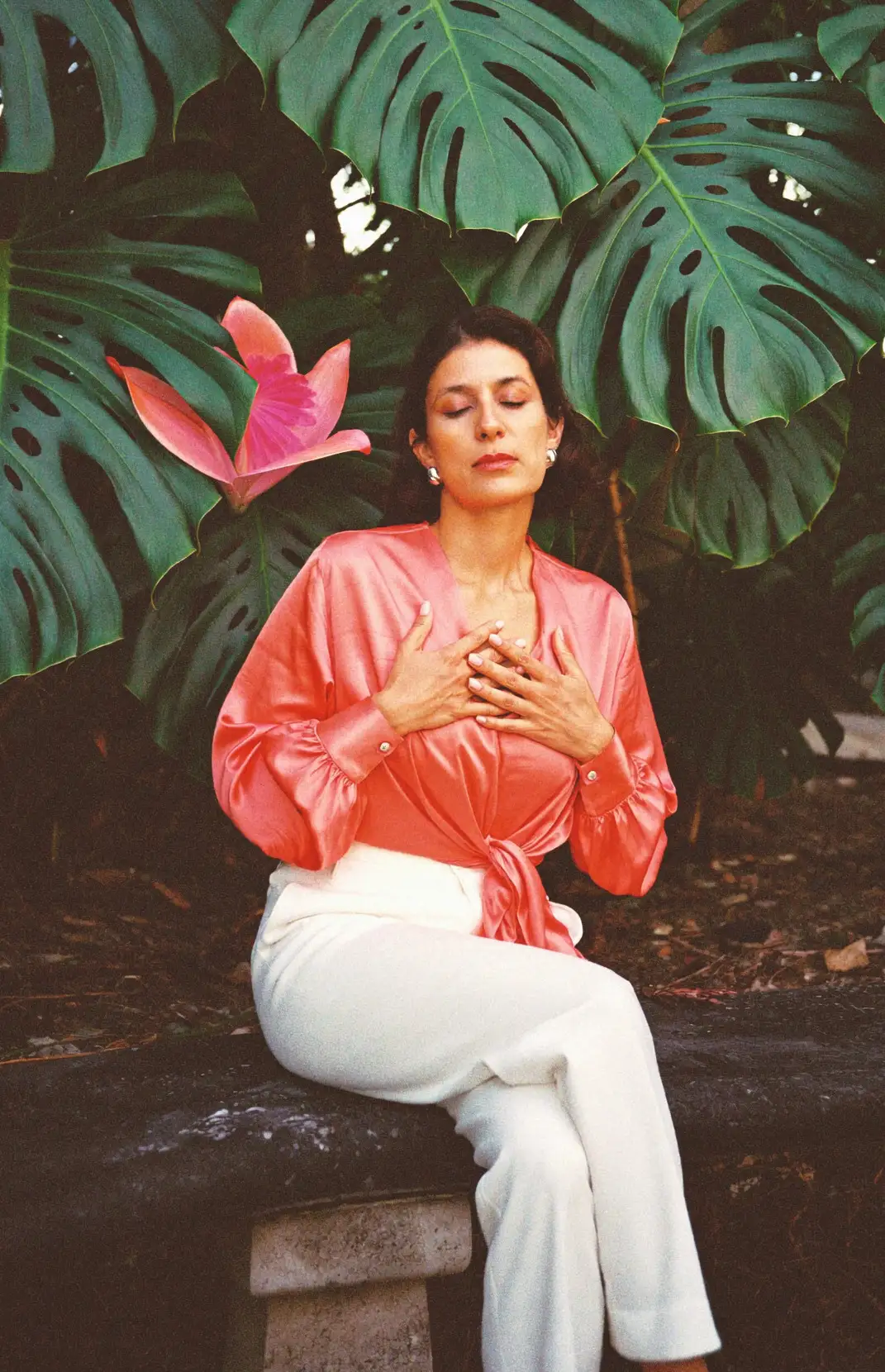
Start here
4-6 breathing, for 2 minutes
Long readCalm10 min
Breathing exercises for anxiety
When anxiety climbs, your breathing usually goes first: faster, higher in the chest, never quite full. That can make the feeling louder. It works the other way too: slow the breath, lengthen the out-breath, and your body tends to follow. Of all the breathing exercises for anxiety, this is the one to start with.
Why does anxiety make you short of breath?
When you feel threatened, your body gets ready to move. Your heart speeds up and your breathing gets quicker and higher in the chest. That’s useful if you need to run. Sitting at a desk or lying in bed, it mostly makes you feel worse.
Quick, shallow breathing can leave you light-headed, with tingling fingers, a tight chest or the sense that you can’t get a full breath. Those feelings are frightening, so anxiety climbs, and the breath speeds up again. It’s a loop. When it tips into fast, gasping breaths, how to stop hyperventilating has the steps.
Breathing is the one part of that loop you can steer on purpose. Your heart speeds up slightly as you breathe in and slows as you breathe out, so a longer out-breath gives the slowing side more time. A slower breath won’t argue with your thoughts. It quietly changes the signals your body sends back. If it’s mostly a squeezing feeling, tight chest anxiety goes into that in more detail.
Which breathing exercises help with anxiety?
Six breaths, for six kinds of moment. Each one plays here: press start, follow the shape with your eyes and let the count do the thinking. If it’s anger, grief or simply too much at once, there are breathing exercises for anger, for grief and for overwhelm as well.
Anxiety rising right now? Try a physiological sigh.
The quickest one. Two breaths in, one long breath out: the same double breath your body takes on its own when it sighs. It’s also the breath behind how to calm down.
- Breathe in through your nose for 2 seconds.
- Take a second, smaller sip of air on top, for 1 second.
- Let it all go in a slow breath out for 6 seconds, through your mouth.
- Two or three of these may be enough. If not, keep going for a minute.
In a remote trial of 108 adults, 5 minutes a day of cyclic sighing lifted mood more than mindfulness meditation (Balban et al. 2023). A small pilot linked one minute of it, in real tense moments, to less anxiety five minutes later (Riedl et al. 2026).
Full guide: physiological sigh
Want something steady to come back to? 4-6 breathing.
The gentlest place to start, and the breath in the card at the top of this page. No holds, and the longer half on the way out.
- Sit or stand with your shoulders loose. Rest a hand on your belly if you like.
- Breathe in through your nose for 4 seconds.
- Breathe out slowly for 6 seconds, through your nose or softly pursed lips.
- Keep going for 2 to 5 minutes. If you lose count, start again from one.
In a study of 47 adults, one 5-minute session of slow breathing with a longer out-breath was followed by lower anxiety in both younger and older people. There was no comparison group, so it shows a short-term change only (Magnon et al. 2021).
Full guide: 4-6 breathing
Thoughts scattering before a call or a talk? Box breathing.
Four equal sides give your attention one simple thing to hold. It’s quiet enough to do in the corridor and nobody will notice. On Apple Watch,  Breathform taps your wrist at each turn, so there’s nothing to look at.
- Breathe in through your nose for 4 seconds.
- Hold for 4 seconds, with your jaw and shoulders soft.
- Breathe out for 4 seconds, then rest for 4.
- Do 8 rounds, about 2 minutes. If the holds feel tight, shorten them to 2.
In a trial of 66 adults, 5 minutes of box breathing before a stressful test blunted the rise in heart rate and anxiety compared with breathing normally (McAllister et al. 2026).
Full guide: box breathing · and breathing exercises for public speaking
Lying awake with it? Hum, quietly.
A low hum with your lips closed stretches the out-breath without any counting, and it’s quiet enough not to wake anyone.
- Stay lying down. Breathe in through your nose for 4 seconds.
- Breathe out for 6 seconds with a soft, low hum, lips closed.
- Feel the buzz in your face and chest. Keep it so quiet only you can hear it.
- A few minutes is plenty. Don’t check the time.
In a small study of 24 adults, humming slowed breathing to about 6 breaths a minute and raised heart rate variability. Blocking the sound with noise-cancelling earphones made no difference, so the authors think the slow out-breath does the work (Kim et al. 2026).
Full guide: humming bee breath · and how to fall asleep with anxiety
Feeling far away or unreal? Ground yourself first.
When anxiety makes the room feel distant, counting what’s around you can bring you back before you count your breath.
- Look around and name five things you can see, silently or out loud.
- Press your feet into the floor and feel it push back.
- Breathe in through your nose for 4 seconds.
- Breathe out for 5 seconds. Keep going for 1 to 3 minutes, eyes open.
Not tested as a named technique, but slow breathing at about 7 breaths a minute, with a slightly longer out-breath, sits close to well-studied slow breathing. The senses part is a therapy technique with little research of its own.
Full guide: grounding techniques
Want a daily practice? Coherent breathing, 5 in and 5 out.
An even rhythm, 6 breaths a minute, for a quiet 10 minutes when nothing is wrong. Practising on calm days makes the breath easier to find on hard ones.
- Breathe in softly through your nose for 5 seconds.
- Breathe out for 5 seconds, as smooth as the in-breath.
- Keep it light and small. Go for 10 minutes, or 5 to begin with.
In a trial of 400 UK adults, 10 minutes a day of coherent breathing for 4 weeks eased anxiety, but no more than a faster “placebo” breathing practice did (Fincham et al. 2023). The daily habit may matter as much as the exact pace.
Full guide: coherent breathing
The 5-minute routine for an anxious moment
- Three physiological sighs. Two breaths in, one long breath out, about 30 seconds.
- Then 4-6 breathing for about 3 minutes. Let your shoulders drop on every out-breath.
- Name three things you can see and one thing you can hear.
- One ordinary breath, then carry on with your day. You don’t have to feel fixed: steadier is enough.
A slower breath won’t argue with your thoughts. It changes what your body tells them.
Do breathing exercises for anxiety actually work?
The biggest review pooled 40 randomised trials with 3,047 people. Breathing-focused programmes eased anxiety more than the comparison groups, with a moderate-to-large effect (Leyro et al. 2021). But 35 of those 40 trials were rated at high risk of bias, so the true effect is probably smaller.
A second review of 12 trials with 785 adults found a small-to-medium drop in stress, with similar effects on anxiety. Most of those trials used slow breathing, and every result was self-reported (Fincham et al. 2023).
What doesn’t seem to matter much is the exact pattern. In a 12-week trial of 100 adults, anxiety fell whether the out-breath was longer than the in-breath or the same length (Birdee et al. 2023).
So: slow breathing tends to take some of the edge off anxiety for many people. It works best as a regular habit, alongside whatever other help you’re using.
How well each breath is studied
- 4-6 breathingWell studied
- Physiological sighSome evidence
- Box breathingSome evidence
- Humming bee breathSome evidence
- Grounding breathingSome evidence
- Coherent breathingWell studied
Every study on this page (9)
- Balban et al., 2023: Five minutes a day of cyclic sighing lifted mood a little more than mindfulness meditation, in 108 adults.
- Riedl et al., 2026: In a small pilot, one minute of box breathing or cyclic sighing in tense moments eased students' anxiety more than no exercise.
- Magnon et al., 2021: In 47 younger and older adults, anxiety was lower after one five-minute slow-breathing session, though the study had no comparison group.
- McAllister et al., 2026: In 66 adults facing a stress test, box breathing or a long out-breath beforehand softened the rise in heart rate and anxiety.
- Kim et al., 2026: In 24 healthy adults, humming slowed breathing to about six a minute; that pace, not the sound, seemed to affect heart rhythm.
- Fincham et al., 2023: In 400 UK adults, four weeks of slow coherent breathing did no better than a faster placebo breathing practice; both groups improved.
- Leyro et al., 2021: Across 40 trials with 3,047 people, breathing-based therapies eased anxiety more than comparison groups, but most trials had design flaws.
- Fincham et al., 2023: Pooled trials suggest breathwork modestly eases stress, anxiety and low mood compared with control groups, though most trials had weaknesses.
- Birdee et al., 2023: In 100 healthy adults, anxiety fell over 12 weeks of slow breathing, with no clear difference between longer and equal out-breaths.
How long should you do breathing exercises for anxiety?
In a hard moment, 1 to 5 minutes. That’s the range the studies above used for a single session, and most people feel steadier within a few rounds. If it hasn’t helped after five minutes, try a different breath, or get up and walk for a bit.
As a habit, 5 to 10 minutes a day. In the trials, people practised for 5 minutes a day for 28 days (Balban et al. 2023) or 10 minutes a day for 4 weeks (Fincham et al. 2023). Tie it to something you already do: the kettle, the commute, the moment you sit down after work. A breath you’ve practised on calm days is much easier to find on a bad one.
Can breathing exercises make anxiety worse?
Sometimes, and it’s worth knowing why so you can adjust rather than give up.
- You feel light-headed or tingly. You’re breathing too much, not too little. Make each breath smaller and slower, or take a few ordinary breaths. Slower, not bigger.
- Paying attention to your breath makes you more anxious. That’s common. Keep your eyes open and follow the player, or count things you can see instead.
- The holds feel tight. Drop them. 4-6 breathing has none.
- Big breaths feel impossible. Don’t chase them. A small, easy breath in and a long breath out is enough.
- It still isn’t helping. Move instead: walk, stretch or splash cold water on your face. Come back to the breath later.
If you often can’t get comfortable with any breath, when breathing feels hard goes into the common reasons.
What is the 3-3-3 rule for anxiety?
It’s a quick grounding trick: name three things you can see, three sounds you can hear, then move three parts of your body. It hasn’t been tested in studies, but it’s harmless and it pulls your attention outwards, which is often what an anxious mind needs. It pairs well with a few slow out-breaths. There’s more, including 5-4-3-2-1, in grounding techniques.
Box breathing or 4-7-8 for anxiety?
For a tense moment, box breathing has a little more research behind it, and its holds are short. 4-7-8 is slower, with a 7-second hold, and is usually used to wind down at night. When you’re very anxious, a long hold can feel like too much: then drop the holds and keep the long out-breath. We put the two side by side in box breathing vs 4-7-8.
What if it turns into a panic attack?
Keep it simple: no holds, no counting beyond what the circle shows you, and a long, slow out-breath. Breathing exercises for panic attacks has the calmest version, and a section for the person beside you. If anxiety is there most days, a GP or therapist can help, and these breaths fit alongside whatever they suggest.
Questions people ask
What is the best breathing technique for anxiety?
No single technique has been shown to beat the others. What the studies have in common is a slow pace, usually with a longer out-breath. 4-6 breathing and the physiological sigh are easy places to start. The best one for you is the one you’ll actually reach for when your chest tightens, so try a few and keep the one that feels kind.
How quickly do breathing exercises work for anxiety?
Often within a minute or two. In one pilot study, students who did a single minute of cyclic sighing or box breathing in a tense moment felt less anxious five minutes later than those who didn’t. Some days it takes longer, and some days it only takes the edge off. Both are normal.
Is breathwork good for anxiety?
Slow breathwork, yes: most trials in the big reviews used slow, paced breathing. Fast, forceful styles, such as rapid breathing with long holds, can bring on tingling, dizziness and a racing heart, which feel a lot like anxiety. If you’re anxious, start slow. There’s more on the different styles in types of breathwork.
Do breathing exercises help with stress too?
Yes. Stress and anxiety run on the same body systems, and the same slow breaths help with both. In a review of 12 trials with 785 adults, breathwork lowered self-reported stress a little more than the comparison groups did. The breaths on this page work just as well after a long day as before a hard conversation.
Should I breathe through my nose or mouth when I’m anxious?
In through your nose, if it’s comfortable. It slows the in-breath on its own and keeps it small. Breathe out through your nose or through softly pursed lips, whichever makes the out-breath longer. If your nose is blocked or you feel short of air, use your mouth: the slow pace matters more than the route.
More in Calm
- 1
Guide · 5 min
Breathing exercises for angerA long out-breath before the reply.
- 2
Guide · 5 min
How to stop hyperventilatingBreathe less, not more: a slower out-breath settles it.
- 3
Guide · 4 min
Breathing exercises for overwhelmFor the days that are too much: one slow breath, then another.
- 4
Guide · 4 min
Breathing exercises for grief and low daysNot to fix anything: a slower breath for the heavy days.
- 5
Guide · 6 min
Grounding techniquesFive things you can see, then one slow breath.
- 6
Long read · 9 min
Breathing exercises to quit smokingA breath for the craving, alongside the quit support that works.
- 7
In the moment · 5 min
Nicotine cravings, breath by breathIt rises, peaks and passes. A breath for the minutes in between.
- 8
Guide · 4 min
Sugar cravings and stress eatingThe pause before the cupboard: one minute, then you decide.
Also filed under Calm Box breathing (square breathing) · 4-7-8 breathing (the relaxing breath) · Physiological sigh (cyclic sighing) · 4-6 breathing (a longer exhale) · Pursed-lip breathing · Grounding breathing · 4-4-6 breathing · 4-2-6 breathing · Equal breathing (sama vritti) · Cooling breath (sheetali)
Read next
Guide · 5 min
Tight chest anxiety: a breath that loosens itGuide · 5 min
Air hunger anxiety: when you can’t get a full breathTechnique · 6 min
Physiological sigh (cyclic sighing)Long read · 10 min
How to calm your nervous system
Breathe gently, never strain, and stop if you feel dizzy, light-headed or short of breath.