In the momentCalm5 min
Nicotine cravings, breath by breath
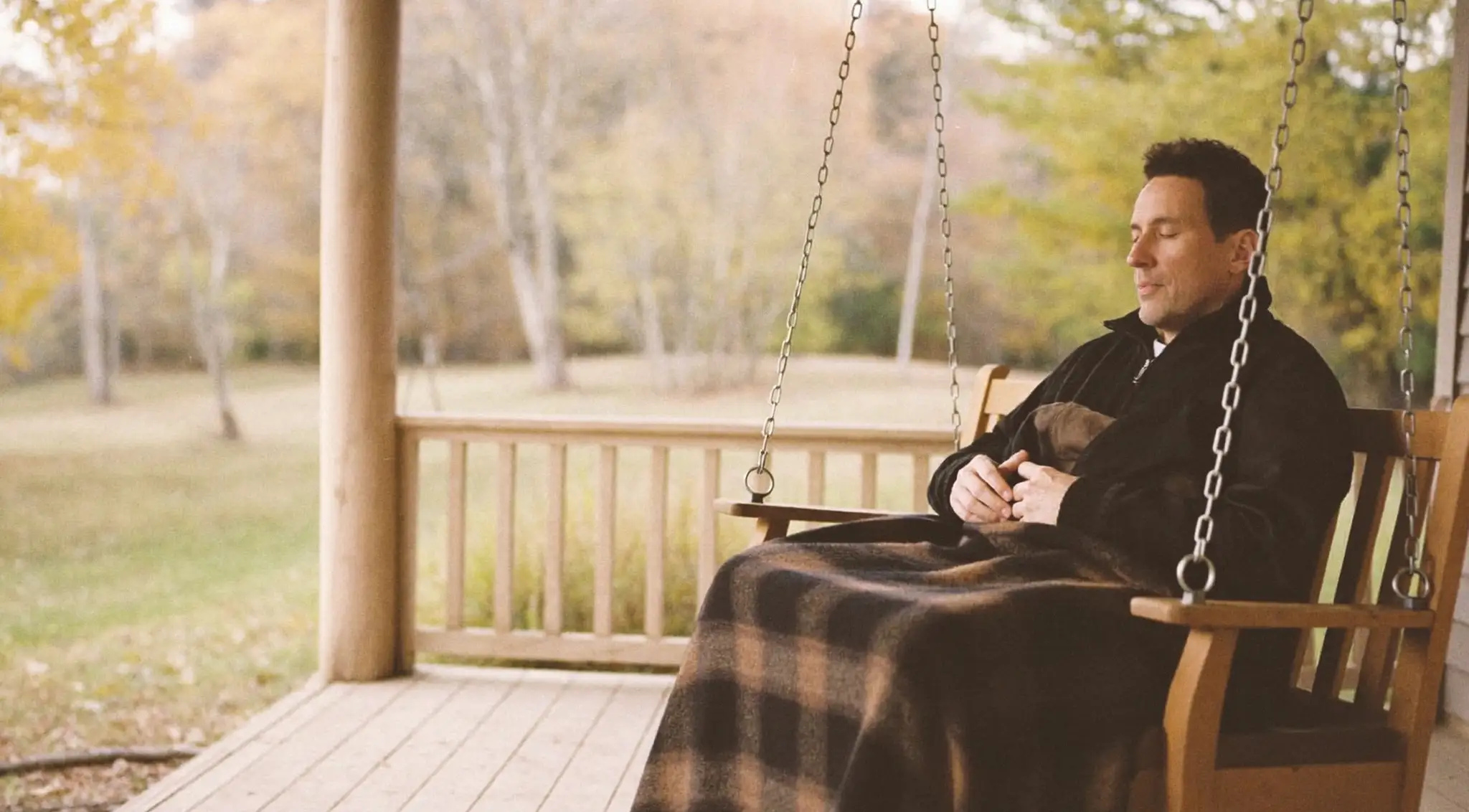
After dinner, on the porch, in the minutes a cigarette used to fill. A craving feels as if it will keep building. It won’t: it rises, peaks and fades. Here’s a breath to ride it out.
Pursed-lip breathing · In 2 · out 4
How long do nicotine cravings last?
Minutes, not hours. The NHS says a craving lasts up to 15 minutes, and suggests a walk, sugar-free gum or a deep breathing exercise to get through it (NHS Better Health). It just doesn’t feel that way from inside one.
The rest of withdrawal runs longer but still has an end. Irritability, restlessness, anxiety, poor sleep and trouble concentrating tend to peak in the first week and fade over 2 to 4 weeks (Hughes 2007).
How do you get through a nicotine craving?
Ride it like a wave: notice it, breathe through the peak, then move. This breath keeps the part your body knows best, the long, slow breath out.
- Name it. Say to yourself, “this is a craving”. It’s a wave, not an order.
- Breathe in through your nose for 2 seconds.
- Breathe out slowly through pursed lips for 4 seconds, as if through a straw. Let your shoulders drop.
- Keep going for about 90 seconds, 15 breaths. If 4 feels short, let the out-breath stretch to 5 or 6.
- Then move. Stand up, walk to the end of the road, drink a glass of water. If the wave comes back, breathe again.
If you’d rather not count,  Breathform keeps the 2 and the 4 with a soft tone, so you can watch the trees instead of a timer. For a longer, slower option, 4-6 breathing works the same way, and the full method is in pursed-lip breathing.
Can breathing stop nicotine cravings?
It can’t switch a craving off, but it can turn it down and help you not act on it.
In a lab study of 96 people who hadn’t smoked for 12 hours, 10 minutes of yogic-style breathing exercises cut the urge to smoke more than watching a breathing video did (Shahab et al. 2013). The effect was short-lived, and by the next day it had gone.
A 10-minute guided body scan lowered the desire to smoke straight away and 5 minutes later, along with irritability and restlessness (Cropley et al. 2007).
And urge surfing, watching the craving rise and fall without acting on it, didn’t make urges smaller in 123 student smokers. They still smoked fewer cigarettes over the next week (Bowen and Marlatt 2009).
So: small studies, short effects, but a consistent pattern. A slow breath can help you ride the wave, even when it doesn’t make the wave smaller.
Every study on this page (6)
- NHS Better Health: The NHS says cravings only last up to 15 minutes, suggests a walk, sugar-free gum or a deep breathing exercise to get through one, and notes some cravings come from the body adjusting to life without nicotine and others from habits and routines.
- Hughes, 2007: Review: anger, anxiety, depression, difficulty concentrating, impatience, insomnia and restlessness are valid tobacco withdrawal symptoms that peak within the first week and last 2–4 weeks.
- Shahab et al., 2013: In 96 smokers abstaining for 12 hours, 10 minutes of yogic-style breathing exercises reduced urges to smoke and cigarette craving in the lab compared with a breathing-video control; there was no difference at 24 hours, when adherence had been low.
- Cropley et al., 2007: In 30 abstinent smokers, a 10-minute guided body scan lowered desire to smoke immediately and 5 minutes afterwards, and lowered irritability, tension and restlessness, compared with listening to a natural history passage.
- Bowen and Marlatt, 2009: In 123 student smokers, brief mindfulness instructions based on urge surfing did not reduce urges during cue exposure, but the mindfulness group smoked significantly fewer cigarettes over the following 7 days than controls.
- Lindson et al., 2023: Cochrane network meta-analysis of 319 trials: fast-acting nicotine replacement alone raised quit rates (high certainty); nicotine e-cigarettes, varenicline, cytisine and combination nicotine replacement (patch plus a fast-acting form) were the most effective options.
Why do cravings hit at the same times?
Because you smoked at the same times. The NHS notes that some cravings come from your body adjusting to life without nicotine, and others from the habits and routines you smoked around. That’s why the porch after dinner, the first coffee or the walk to the car can feel louder than the rest of the day.
Use that. If you know where the cravings wait, you know where to put the breath. Do it in the same spot, at the same time, and let the old moment get a new ending.
What about vape cravings?
A vape craving is a nicotine craving, so the breath works the same way. If you vaped little and often through the day rather than at set times, the cues are spread more thinly, so use the breath little and often too: a few slow out-breaths whenever your hand goes to your pocket.
What else helps with a nicotine craving?
Fast-acting nicotine replacement, such as gum, lozenges or a mouth spray, is made for this moment, and it works. In a large review of quit aids, fast-acting forms raised quit rates, and a patch plus a fast-acting form was among the most effective options of all (Lindson et al. 2023).
The breath and the gum work well together: the gum for the nicotine, the slow out-breath for the minutes it takes to kick in. The whole plan, with four breaths for four kinds of moment and the support that works best, is in breathing exercises to quit smoking.
Questions people ask
How long do nicotine cravings last after quitting?
A single craving lasts minutes: the NHS says up to 15. The rest of withdrawal, the irritability, restlessness, poor sleep and trouble concentrating, tends to peak in the first week and fade over 2 to 4 weeks. If a craving does turn up later, in an old place or on a hard day, it’s still a wave, and the breath on this page works the same in week ten as in week one.
Why are nicotine cravings worse after eating?
Because the end of a meal was a cigarette moment. The NHS notes that some cravings come from your body adjusting to life without nicotine, and others from the habits and routines you smoked around. Change the routine a little: get up from the table, wash up, step outside without the cigarette, and do the breath there.
Is it normal to feel angry when a craving hits?
Yes. Anger, impatience, anxiety and restlessness are all recognised parts of nicotine withdrawal, and they usually settle within a few weeks. It can help to tell the people around you, so a short reply isn’t taken personally. A minute of slow breathing with a long out-breath is a good thing to do before you answer anyone.
Does nicotine gum help with cravings?
Yes, it’s made for that moment. Fast-acting nicotine replacement, such as gum, lozenges and mouth spray, raises quit rates, and using it alongside a patch is among the most effective options. It works well with the breath: the gum for the nicotine, the slow out-breath for the minutes it takes to kick in.
Practices in this guide
Read next
Long read · 9 min
Breathing exercises to quit smokingGuide · 5 min
Breathing after quitting smokingTechnique · 6 min
Pursed-lip breathingTechnique · 5 min
4-6 breathing (a longer exhale)Guide · 4 min
How to calm down
More in Calm
Long read · 10 min
Breathing exercises for anxietyGuide · 4 min
Breathing exercises for panic attacksGuide · 5 min
Breathing exercises for angerGuide · 5 min
How to stop hyperventilatingGuide · 4 min
Breathing exercises for overwhelmGuide · 4 min
Breathing exercises for grief and low daysGuide · 6 min
Grounding techniquesGuide · 4 min
Sugar cravings and stress eating
Breathe gently, never strain, and stop if you feel dizzy, light-headed or short of breath.