Field guideA longer out-breath
Pursed-lip breathing
In the Breathform app, this is Ease
Follow the tide: it rises as you breathe in and falls as you breathe out.
- Pattern
- In 2 · out 4
- Pace
- 10 breaths a minute
- Length
- 1:30 · 15 rounds
- Evidence
- Some evidence
How do you do pursed-lip breathing?
Sit with your back supported. Let your shoulders drop and your neck go loose: tension there makes every breath harder work.
- Breathe in through your nose for 2 seconds, mouth closed. A normal-sized breath, not a deep one.
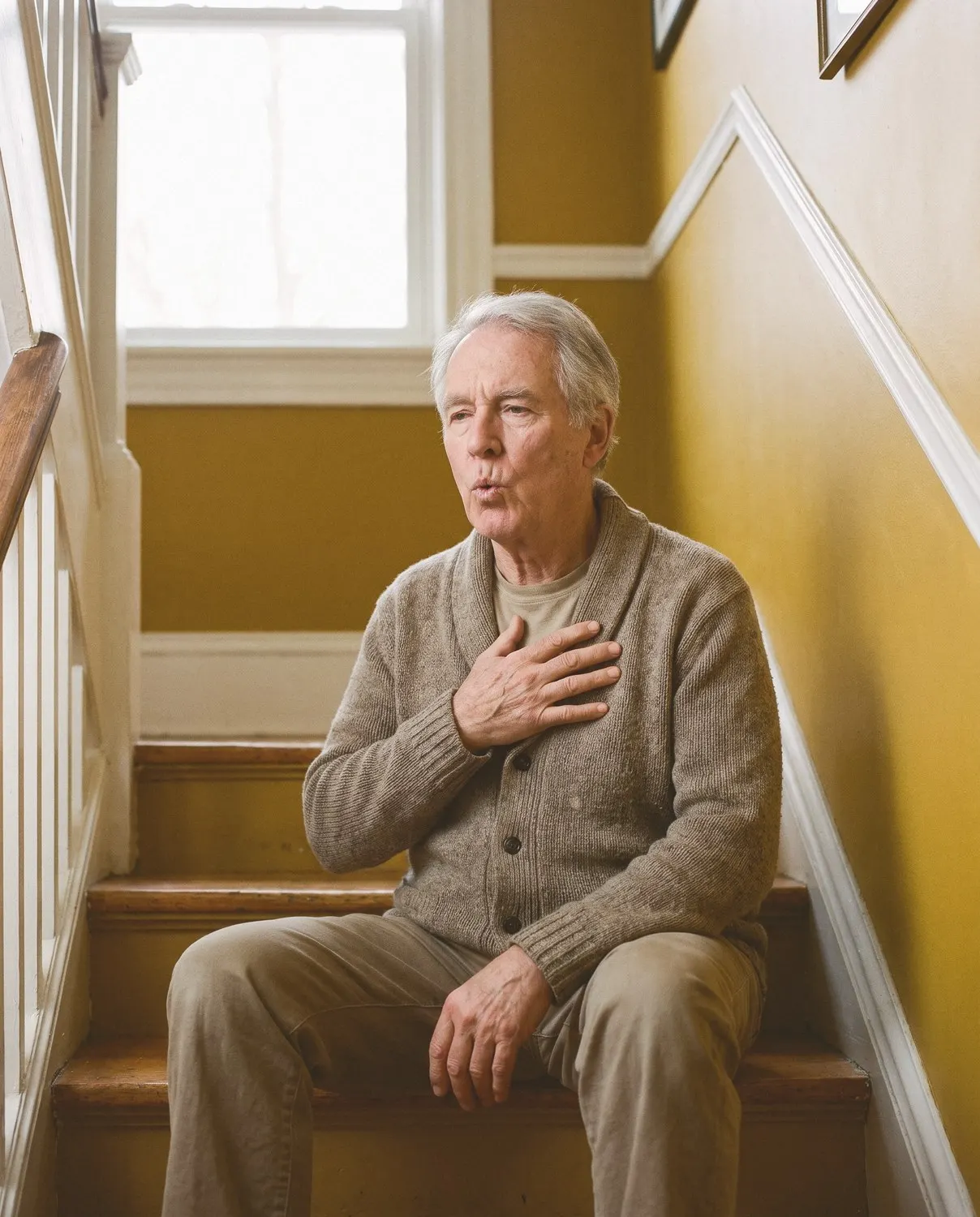
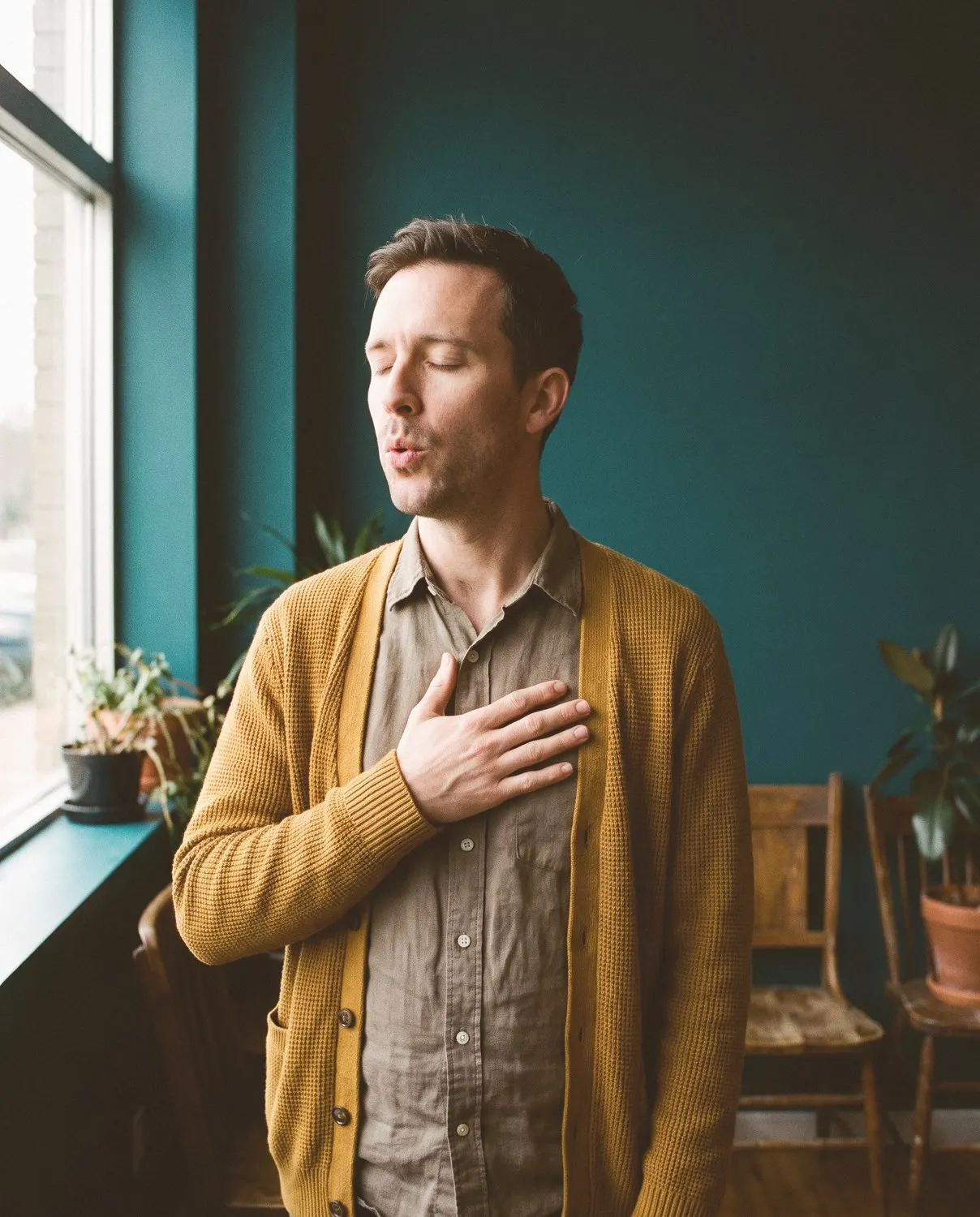
- Purse your lips, as if you were about to whistle, or blow on a candle just enough to make the flame bend.
- Breathe out slowly through your pursed lips for 4 seconds. Let the air leave on its own; don’t push it out.
- Repeat for 15 rounds, about 90 seconds, or for as long as it helps. If 4 feels short, let the out-breath grow to 5 or 6. If you feel light-headed, breathe more gently.
At 10 breaths a minute, this is one of the quickest of Breathform’s practices, and that suits it: when you’re short of breath, a long count is hard to follow. What matters is the shape, out for longer than in, and there are no holds to manage, unlike box breathing.
Why is pursed-lip breathing used for COPD?
In COPD, the small airways are narrowed and can close before a breath is fully out. Air gets trapped, and the next breath starts from a chest that’s already too full. Breathing out against softly pursed lips adds a little resistance at the lips. The idea is that this keeps some pressure in the airways, helping them stay open for longer, so more air gets out and breathing can slow down.
It does change the pattern. In a study of 8 people with COPD, pursed lips made breathing slower and deeper, at rest and on an exercise bike, though the effect on breathlessness varied from person to person (Spahija et al. 2005). Respiratory physiotherapists and nurses teach it often for exactly this. If you have COPD, use it alongside your care team’s advice.
What is pursed-lip breathing good for?
For the moments when breathing feels like hard work: climbing stairs, carrying shopping, bending to tie a shoe, the first minutes after a run. Breathe in before the effort, then out through pursed lips during the hardest part of it. It’s a good companion on walks in the weeks after you stop smoking, too: see breathing after quitting smoking.
It works as a calming breath, too. A long, gentle out-breath is one of the simplest ways to slow down when you’re tense, and the pursed lips make it almost automatic. For a longer version without the lips, try 4-6 breathing.
Does pursed-lip breathing help anxiety?
It may, though it’s mostly been studied in lung disease rather than in anxiety. The closest evidence comes from a trial in healthy adults before a stressful test. Taking one slow breath every 30 seconds, in through the nose for 3 seconds and out through pursed lips for 6, blunted the rise in heart rate and anxiety compared with normal breathing (McAllister et al. 2026).
When anxiety makes you feel you can’t get enough air, the instinct is to breathe in harder. Pursed lips turn your attention to the out-breath instead, which is usually where relief starts. Air hunger anxiety and how to stop hyperventilating go further.
What does the research say?
In people with COPD, pursed-lip breathing during exercise lowered breathing rate and the amount of air moved each minute, in a review of 8 trials. It didn’t change how far people could walk in 6 minutes (Mayer et al. 2018).
Over weeks, the picture is encouraging but uncertain. In a small trial of 40 people with COPD, those who practised it for 12 weeks felt less breathless after a walking test and reported better physical function; the two comparison groups didn’t (Nield et al. 2007). A 2025 review rated the evidence that it eases breathlessness as low quality: a moderate benefit is possible, but the true effect could be larger or smaller (Pinna et al. 2025).
So: a standard, sensible technique for breathlessness, with modest evidence and little research in healthy people.
Every study on this page (5)
- Spahija et al., 2005: In 8 people with COPD, pursed-lips breathing produced a slower, deeper breathing pattern at rest and during exercise; its effect on breathlessness during exercise varied between patients.
- McAllister et al., 2026: In 66 adults facing a stress test, box breathing or a long out-breath beforehand softened the rise in heart rate and anxiety.
- Mayer et al., 2018: In eight trials of people with the lung disease COPD, pursed-lips breathing during exercise slowed breathing but didn't help them walk further.
- Nield et al., 2007: In a randomised pilot of 40 adults with COPD, 12 weeks of pursed-lips breathing training reduced breathlessness after a 6-minute walk and improved physical function; only the pursed-lips group improved.
- Pinna et al., 2025: In people whose airways are narrowed by lung disease, weak evidence suggests pursed-lip breathing may moderately ease breathlessness in the short term.
Why does pursed-lip breathing feel hard?
- You run out of air. Purse your lips a little less. The opening should slow the air, not block it.
- It feels like blowing. Don’t push. Picture a candle flame that bends but stays lit.
- Your cheeks puff out. Soften your lips and let your cheeks rest. The work happens at the lips, not in your face.
- You breathe in through your mouth. Habit, mostly. Close your lips gently before each breath in; if your nose is blocked, a slow mouth breath in is fine.
- You feel light-headed. Make the breaths smaller and take a few normal ones before you carry on.
Pursed-lip or diaphragmatic breathing: which is better?
They work well together. Diaphragmatic breathing is about where the breath goes: low, into your belly, with your shoulders still. Pursed-lip breathing is about how it leaves: slowly, through a narrow opening. Many respiratory teams teach both at once. To practise the pair, let  Breathform keep the 2 in and 4 out while your attention stays low, on your belly.
| Feature | Pursed-lip breathing | Diaphragmatic breathing |
|---|---|---|
| What it changes | How the breath leaves: slowly, through pursed lips | Where the breath goes: low, into the belly |
| The cue | Blow gently on a candle | A hand on your belly that rises first |
| Best for | Breathlessness on effort, a long calming out-breath | Learning to breathe low and slow at rest |
| Together | In through the nose, into the belly… | …then out through pursed lips |
The full guide to the other half is diaphragmatic breathing.
Questions people ask
How long should you breathe out?
About twice as long as you breathe in: 2 seconds in and 4 out to start. If that’s easy, let the out-breath stretch to 5 or 6 while the in-breath stays short. Never force the last of the air out. A slow, steady stream is the aim, not an empty chest.
Can pursed-lip breathing help when you’re out of breath after exercise?
Yes, it’s a natural fit. After a run, a hill or a flight of stairs, breathe in through your nose if you can, then out through pursed lips for longer than the in-breath. It turns quick, ragged breaths into slower ones. In people with COPD it lowered breathing rate during exercise; it’s less studied in healthy people.
How often should you practise pursed-lip breathing?
A few minutes, a few times a day, while you’re calm. That makes it easier to reach for when you’re not. Once it feels natural, use it whenever you need it: on the stairs, after exercise or when you notice you’re tense.
Is pursed-lip breathing good for older adults?
Yes. It’s one of the simplest breaths there is, and easy to use while walking, gardening or climbing stairs: there’s no count to keep and nothing to hold. Breathing exercises for seniors has it alongside other gentle breaths, with ideas for building them into the day.
Is it the same as “smell the flower, blow out the candle”?
Very nearly. That’s the children’s version: sniff a flower through the nose, then blow on a candle through rounded lips, slowly, so it only flickers. It teaches the same long, gentle out-breath. There’s a full guide in smell the flower, blow out the candle.
More on pursed-lip breathing
Side by side · 6 min
Best breathing techniques: one honest tableGuide · 4 min
Breathing exercises for panic attacksGuide · 5 min
Tight chest anxiety: a breath that loosens itGuide · 4 min
Breathing exercises for nauseaKids · 8 min
Breathing exercises for kidsKids · 4 min
Animal breaths for kidsSide by side · 5 min
Chest breathing vs belly breathing: where your breath goesGuide · 5 min
Shallow breathing
Read next
Technique · 7 min
Diaphragmatic breathing (belly breathing)Guide · 5 min
Air hunger anxiety: when you can’t get a full breathGuide · 5 min
Breathing exercises for seniors and older adultsGuide · 5 min
How to stop hyperventilatingKids · 4 min
Smell the flower, blow out the candle (hot chocolate breathing)Guide · 5 min
Breathing after quitting smoking
Breathe gently, never strain, and stop if you feel dizzy, light-headed or short of breath.