GuideCalm4 min
Breathing exercises for overwhelm
Too much noise, too many tabs open, too many people wanting something. When it’s all too much, you don’t need a technique to master. You need one slow breath, then another.
How do you calm down when you’re overwhelmed?
Take things away first, then add one slow breath. There’s no right way to do this: skip any step that doesn’t suit you.
- Stop adding. Put the phone face down, close the laptop lid, or step out of the room if you can.
- Find one spot to rest your eyes on: a corner, a plant, the floor in front of you.
- Breathe in through your nose for 4 seconds and out for 5, with the player above. Let your weight sink into whatever is holding you.
- Keep going for 1 to 3 minutes. Counting isn’t compulsory: a slightly longer out-breath is enough.
- Name the one next thing. Not the whole list. Just the next small step.
What’s a quick reset when everything is too much?
Two breaths in, one long breath out: the physiological sigh. It’s the double breath your body takes on its own when it sighs, done on purpose.
- Breathe in through your nose, then take a second small sip of air on top.
- Breathe out slowly through your mouth, for as long as is comfortable.
- Two or three is often enough. A minute of them is better.
In a remote trial of 108 adults, 5 minutes a day of cyclic sighing lifted mood more than mindfulness meditation (Balban et al. 2023). More in how to calm down.
Which breathing exercises for overwhelm help with noise and crowds?
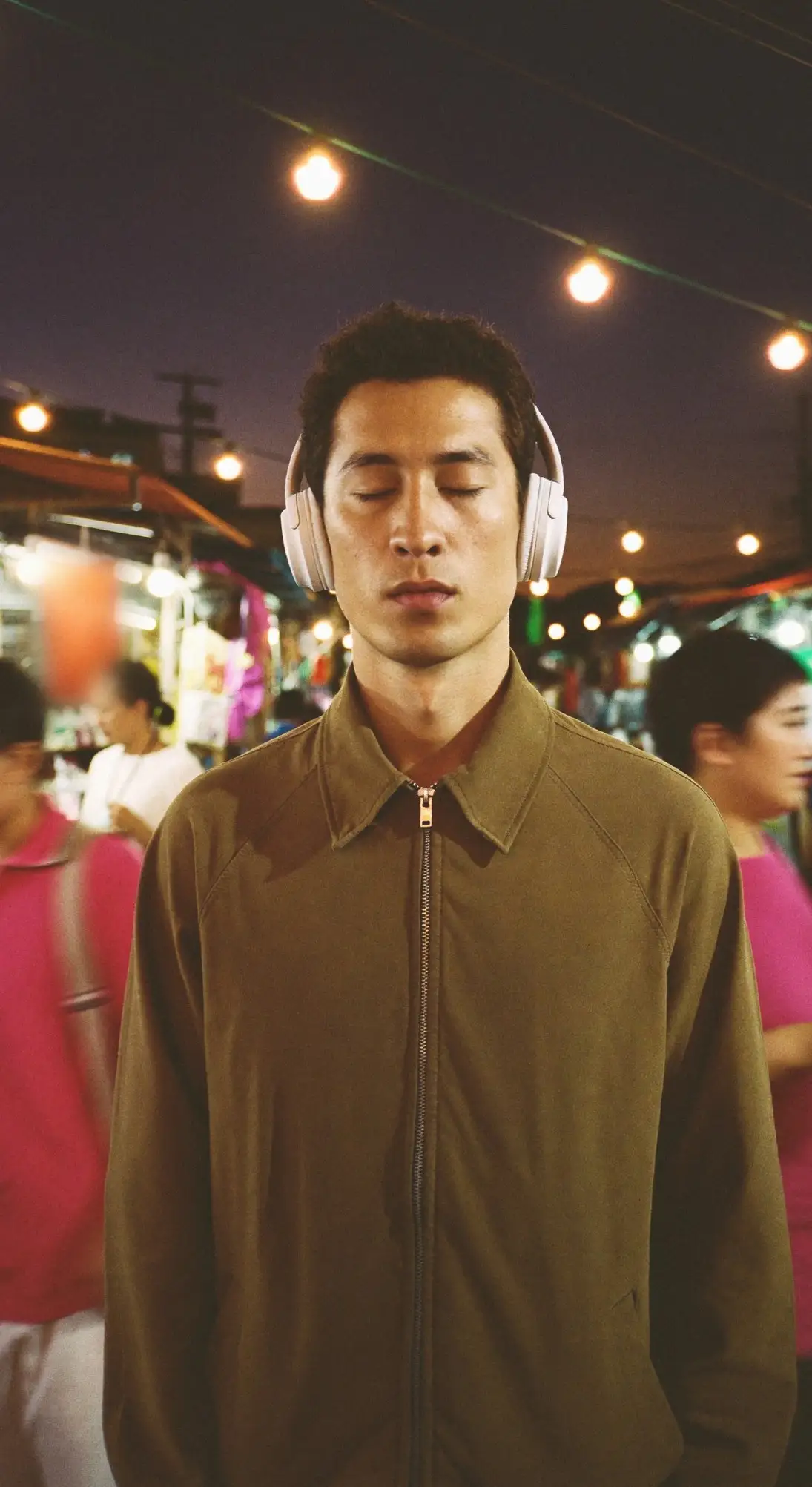
When it’s overstimulation, from noise, light or crowds, turn the input down before you do anything with your breath. Noise-cancelling headphones, a dimmer room, a quiet corner, closed eyes: whatever helps. With headphones on,  Breathform can put soft rain or a river under your breath instead of the room. Then try humming.
- Breathe in through your nose for 4 seconds.
- Breathe out for 6 seconds with a low hum, lips closed. As quiet as you like.
- Notice the buzz in your face and chest. Let it be the only sound for a minute.
Why does humming help when you’re overstimulated?
It gives you one sound and one feeling you control, from the inside, while the outside is too loud. It also stretches the out-breath without any counting. In a small study of 24 adults, humming slowed breathing to about 6 breaths a minute and raised heart rate variability, and blocking the sound with noise-cancelling earphones made no difference, so the authors think the slow out-breath does the work (Kim et al. 2026). If humming feels like too much, breathe out silently through softly parted lips instead.
Can breathing stop overthinking?
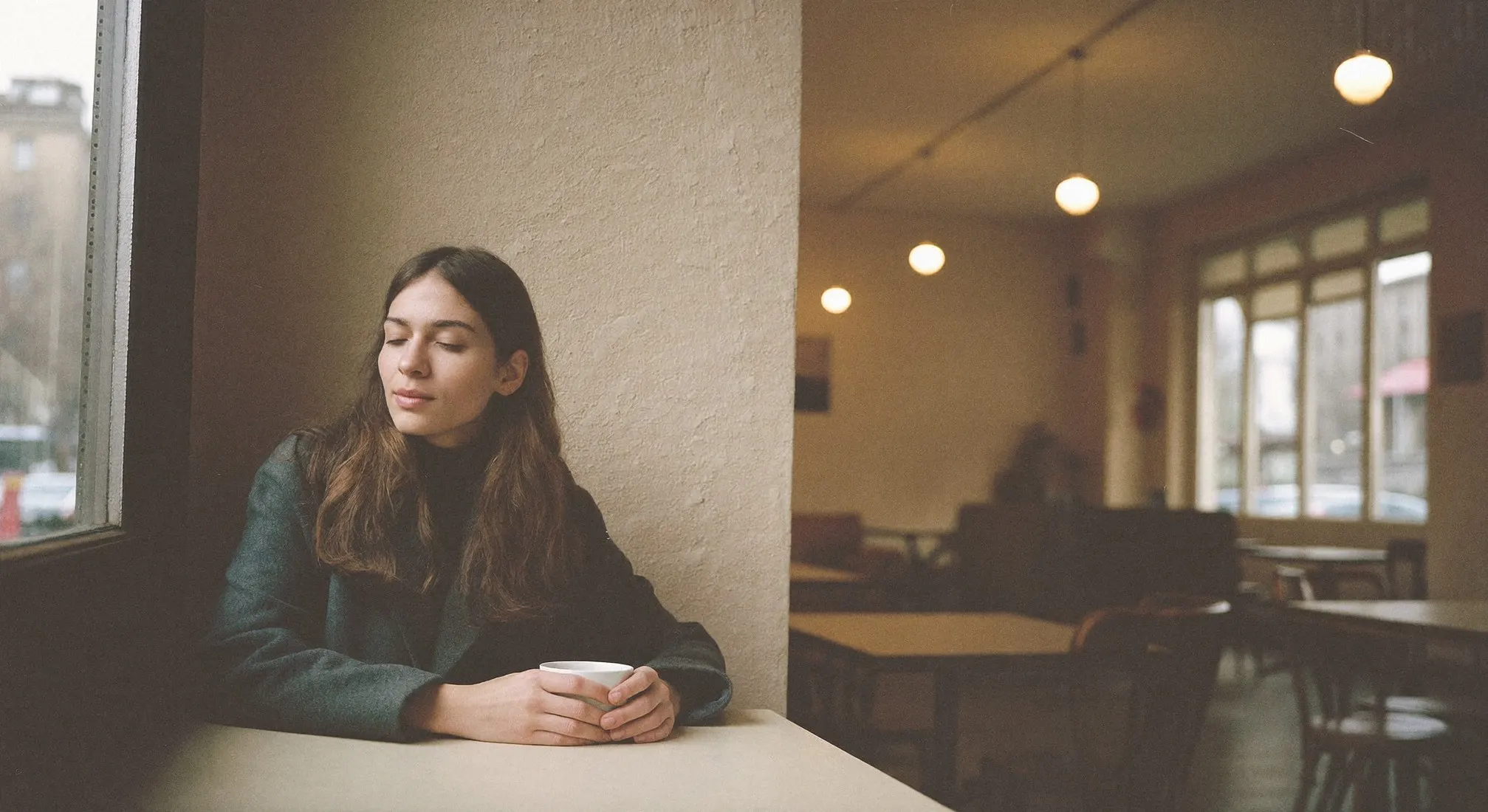
It won’t switch thoughts off, and trying to force them away usually makes them louder. What a slow breath can do is give your attention somewhere else to go for a minute, again and again. Each time you notice you’ve drifted back into the loop, come back to the out-breath. That noticing is the practice. A small review of slow-breathing studies found people reported feeling less anxious and more relaxed, though none of the studies was a randomised trial (Zaccaro et al. 2018). For a short, structured version, try the 3-minute breathing space.
What does nervous system overload feel like?
Everyone’s version is different, but common signs are feeling wired and exhausted at once, snapping at small things, sounds and lights seeming sharper, losing words, and wanting to hide somewhere quiet. It isn’t a diagnosis, just a useful way of describing a body that’s had too much input for too long. How to calm your nervous system goes deeper into the longer-term side.
Every study on this page (3)
- Balban et al., 2023: Five minutes a day of cyclic sighing lifted mood a little more than mindfulness meditation, in 108 adults.
- Kim et al., 2026: In 24 healthy adults, humming slowed breathing to about six a minute; that pace, not the sound, seemed to affect heart rhythm.
- Zaccaro et al., 2018: In 15 small studies of healthy people, slow breathing was linked with feeling more relaxed and alert, and less anxious.
Questions people ask
Is overwhelm the same as anxiety?
They overlap, but they’re not quite the same. Overwhelm is the feeling of too much at once: too many demands, too much noise, too little time. Anxiety is more about worry over what might happen. They often arrive together, and the same slow breaths help with both. There’s more in breathing exercises for anxiety.
Why do I cry when I’m overwhelmed?
It’s very common, and it isn’t a sign that something is wrong with you. When the pressure builds past a certain point, tears are one of the ways it comes out. Let them. Afterwards, a few slow breaths with a long out-breath can help you feel steady enough to decide what to do next.
How long should I breathe for when I’m overwhelmed?
Start with 1 to 3 minutes. That’s usually long enough to notice your shoulders drop and your thoughts slow a little. If it helps, keep going for 5 or 10. If you only have 30 seconds, three slow sighs are still worth doing. Short and often works better than long and never.
What if breathing exercises make it worse?
That happens to some people, especially when attention turned inwards feels like one more demand. Keep your eyes open, breathe at your own pace and just make the out-breath a little longer. Or use your senses instead: name what you can see and feel. Moving, like a slow walk, is a good option too.
Practices in this guide
Read next
Technique · 5 min
Grounding breathingGuide · 4 min
How to calm downLong read · 10 min
How to calm your nervous systemTechnique · 6 min
Humming bee breath (bhramari)Technique · 5 min
The 3-minute breathing space
More in Calm
Long read · 10 min
Breathing exercises for anxietyGuide · 4 min
Breathing exercises for panic attacksGuide · 5 min
Breathing exercises for angerGuide · 5 min
How to stop hyperventilatingGuide · 4 min
Breathing exercises for grief and low daysGuide · 6 min
Grounding techniquesLong read · 9 min
Breathing exercises to quit smokingIn the moment · 5 min
Nicotine cravings, breath by breath
Breathe gently, never strain, and stop if you feel dizzy, light-headed or short of breath.