QuestionsTechniques6 min
Types of breathwork, from gentle to intense
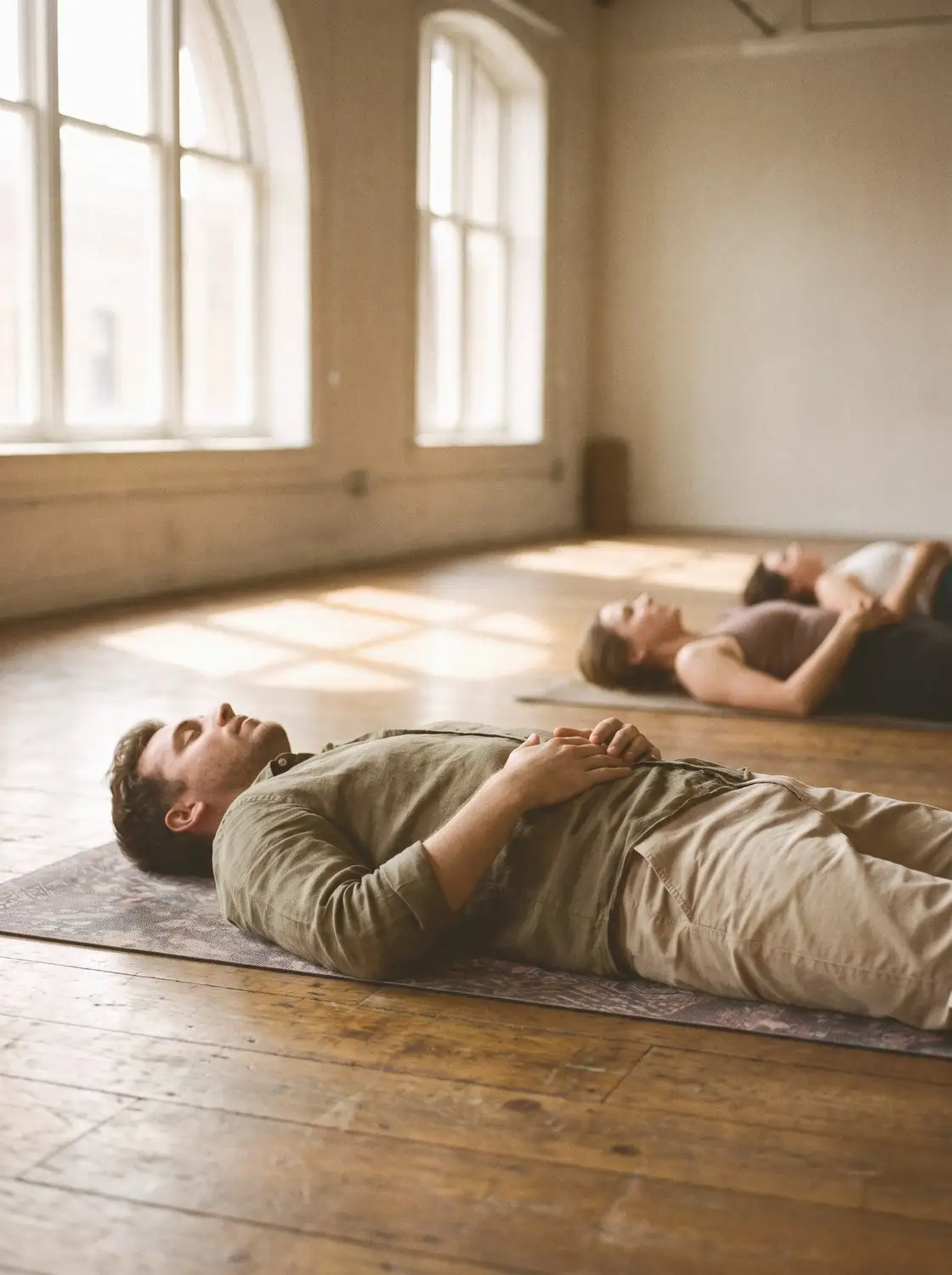
What are the different types of breathwork?
Breathwork is any practice that uses the breath on purpose. The simplest way to sort the types is by pace: does the practice slow your breathing down, or speed it up? That one question tells you most of what it will feel like. For the bigger picture, see what is breathwork?
| Type | What you do | How it feels |
|---|---|---|
| Slow, paced breathing | Breathe to a count, usually 3 to 7 breaths a minute | Calm, steady |
| Yoga breathing (pranayama) | Slow breaths with a sound, a nostril or a hold | Calm, focused |
| Mindful and somatic breathing | Pay attention to the breath and body, often slowing the out-breath | Settled, aware |
| Fast breathing and long holds | Rapid or connected breathing, often with long holds | Energised, tingly, emotional |
Slow, paced breathing
You breathe to a count, usually with a longer out-breath or short holds: box breathing, coherent breathing (5 in, 5 out), 4-6 breathing, 4-7-8. Most breathing research is about this end, and it’s where every  Breathform practice sits.
Yoga breathing
The gentle pranayamas, such as humming bee breath, alternate nostril breathing and ujjayi, are slow too, with a sound or a nostril added. Yoga also has forceful ones, kapalabhati and bhastrika, which belong with the intense types.
Mindful and somatic breathing
Here the focus is attention: noticing the breath and how your body feels, rather than following a count. Somatic breathing adds a slow, long out-breath and sometimes a low sound.
Fast breathing and long holds
Wim Hof breathing, holotropic breathwork, breath of fire, conscious connected breathing, tummo and Sudarshan Kriya all use fast, deep or unbroken breathing, often with long holds. They’re usually taught in classes, retreats or courses, and they feel very different from slow breathing.
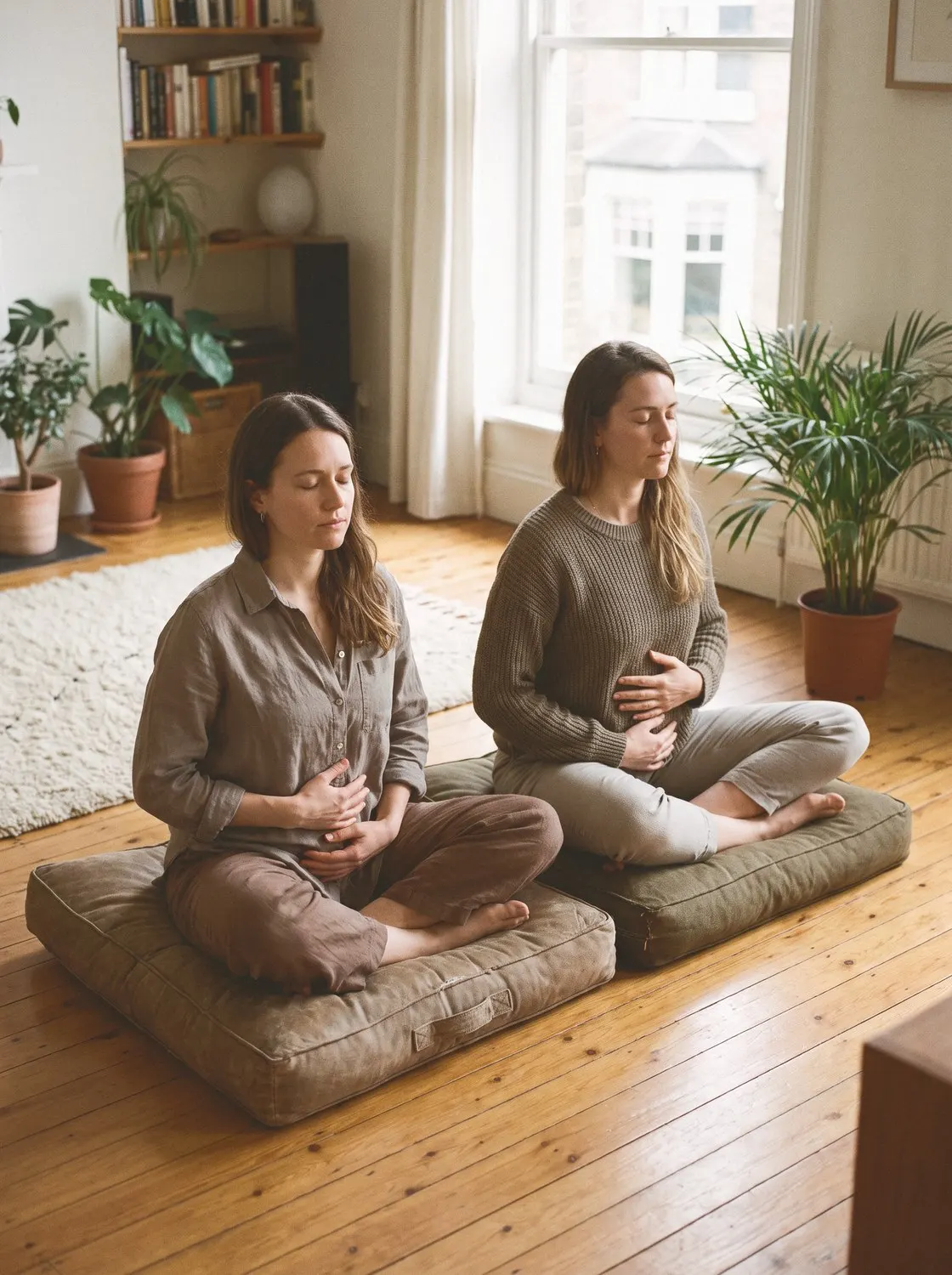
What’s the difference between gentle and intense breathwork?
Gentle breathwork keeps your carbon dioxide close to its usual level and nudges your body towards rest. Intense breathwork breathes off carbon dioxide on purpose, which changes your blood chemistry for a while and stirs your body up.
| Feature | Gentle breathwork | Intense breathwork |
|---|---|---|
| Examples | Box, coherent, 4-6, most pranayama | Wim Hof, holotropic, breath of fire |
| Pace | Slower than usual | Faster or deeper than usual, often with long holds |
| How you feel | Calmer, steadier | Buzzing, tingly, sometimes emotional |
| Where | Anywhere: the desk, the bus, bed | Sitting or lying down, ideally with a guide |
| Research | Many small trials | A few trials, mostly early |
What is Wim Hof breathing?
It’s fast breathing with long holds, and it isn’t gentle. A round is 30 or so fast, deep breaths, then a long hold with your lungs empty, then a short hold after one big breath in. For most healthy adults, done sitting or lying down, it’s generally well tolerated. Light-headedness and tingling are normal, and some people faint during the holds. That’s why the method’s own instructions say never to practise in or near water, or while driving.
The best-known study combined Wim Hof breathing with meditation and cold water. After 10 days of training, 12 volunteers had far more adrenaline, fewer signs of inflammation and fewer flu-like symptoms than 12 untrained volunteers, after an injection of a bacterial toxin that brings on brief flu-like symptoms (Kox et al. 2014). In another trial, a similar fast-breathing-with-holds practice lifted mood, as did the slow breaths and the meditation it was compared with (Balban et al. 2023).
What is holotropic breathwork?
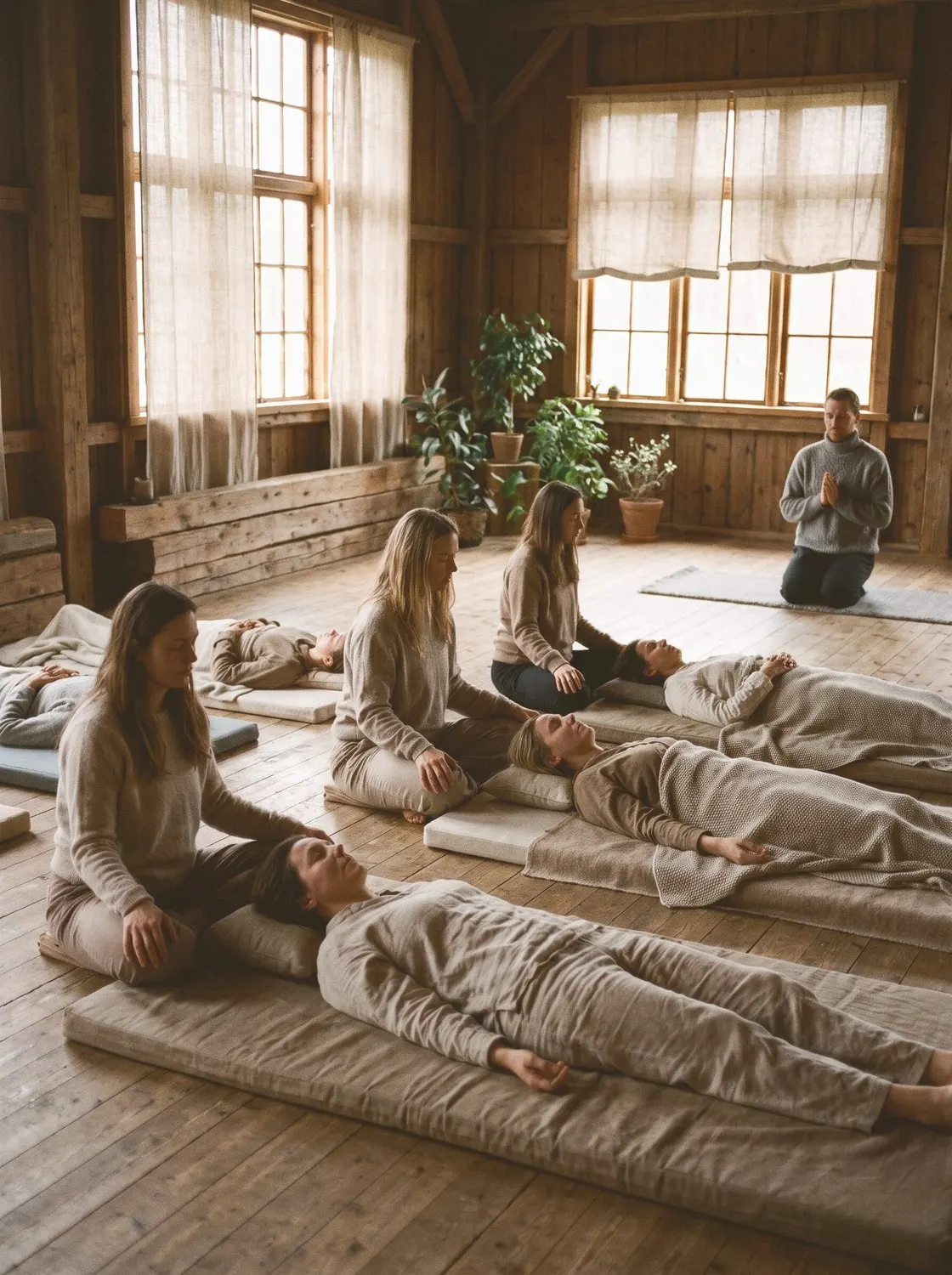
It’s a long, intense group method developed by the psychiatrist Stanislav Grof and Christina Grof in the 1970s. People breathe fast and deep for up to a few hours to loud, evocative music, in pairs, one breathing while the other sits beside them, with trained facilitators in the room. The aim is an altered state of mind, and sessions often end with drawing and sharing. There’s very little controlled research on it.
What is breath of fire?
Breath of fire comes from Kundalini yoga: rapid, rhythmic breathing through the nose, in and out for the same length with no pause, the belly pumping each out-breath and the in-breath following by itself, about two or three breaths a second. It’s a close cousin of kapalabhati, which has short, sharp out-breaths. Both are energising and can make you light-headed. We describe them rather than teach them.
Why do people tingle or cry during breathwork?
Tingling comes from chemistry. Breathing fast and deep blows off carbon dioxide faster than your body makes it, and your blood becomes slightly more alkaline. That can cause pins and needles in your hands and face, a light head and sometimes stiff, cramped fingers. The Wim Hof study measured this shift in blood chemistry during practice (Kox et al. 2014). It fades within minutes of breathing normally. For more on what carbon dioxide does, see CO2 tolerance.
Crying is the other common one. Intense sessions combine strong body sensations, music, a group and a long time with your own thoughts. A 2023 review of fast-breathing practices describes extraordinary shifts in how people experience themselves (Fincham et al. 2023). If slow breathing ever leaves you dizzy, when breathing feels hard explains why and what to change.
Which type of breathwork is best for anxiety?
Slow breathing. A meta-analysis of 12 randomised trials with 785 adults found breathwork lowered stress, a small-to-medium effect, and 10 of those 12 trials used mainly slow breathing (Fincham et al. 2023). Breathing at about 6 breaths a minute reliably raises heart rate variability, the small beat-to-beat changes that tend to grow when you’re at rest (Laborde et al. 2022).
Intense breathwork can feel a lot like anxiety: a racing heart, tingling, a light head. For an anxious mind, that’s rarely the place to start.
So: start slow. Pick one of these three and give it two minutes:
How well each breath is studied
- Box breathingSome evidence
- Coherent breathingWell studied
- 4-6 breathingWell studied
Every study on this page (5)
- Kox et al., 2014: Healthy volunteers trained for 10 days in meditation, cyclic hyperventilation with breath retention and cold exposure had intermittent respiratory alkalosis and hypoxia while practising, much higher adrenaline, lower inflammatory markers and fewer flu-like symptoms after an injection of bacterial endotoxin than untrained controls (12 per group).
- Balban et al., 2023: Five minutes a day of cyclic sighing lifted mood a little more than mindfulness meditation, in 108 adults.
- Fincham et al., 2023: A review of high ventilation breathwork describes extraordinary changes in subjective experience and marked effects on the nervous system, and calls for rigorous clinical testing of its proposed uses.
- Fincham et al., 2023: Pooled trials suggest breathwork modestly eases stress, anxiety and low mood compared with control groups, though most trials had weaknesses.
- Laborde et al., 2022: Across 223 studies, slow breathing raised heart-rhythm signs of calm, during practice and after, though that alone doesn't prove a health benefit.
Why does Breathform stay gentle?
Because slow breathing is the part with the evidence, and it fits into ordinary life: the desk, the train, the edge of the bed. You can do it with your eyes open, in public and every day. The intense methods have their fans and their moments, but they need a guide, a safe place and time to recover. Ours need two minutes.
Questions people ask
Wim Hof vs box breathing: which is better?
They do opposite jobs. Box breathing slows you down: an even count with short holds, about 4 breaths a minute, to steady yourself before something. Wim Hof breathing speeds you up first, with fast, deep breaths, then a long hold, and leaves many people buzzing. For calm, box wins. For a jolt, some people choose Wim Hof, done sitting or lying down.
What is conscious connected breathing?
It’s breathing with no pause between the in-breath and the out-breath, usually fuller and faster than normal, kept going for up to an hour or so with a facilitator. It grew out of rebirthing in the 1970s and underlies many modern breathwork classes, including some sold as somatic breathwork. It sits at the intense end, and strong feelings and tingling are common.
Is breathwork safe?
Gentle breathwork, slow and comfortable, is safe for almost everyone: the worst most people feel is a little light-headed if they breathe too big. The intense types carry more risk, from fainting during long holds to strong emotions surfacing. Do them sitting or lying down, with a trained guide the first times, and never in or near water.
Can breathwork make you feel high?
Fast breathing can. Blowing off carbon dioxide changes your blood chemistry for a while, and the result can be tingling, a light, floaty head, vivid feelings and a sense of being somewhere else. People sometimes describe it as a natural high. It wears off within minutes of breathing normally. Gentle breathwork doesn’t do this: it feels calm, not altered.
Practices in this guide
Read next
Questions · 6 min
What is breathwork?Technique · 5 min
Somatic breathingLong read · 9 min
Pranayama: yoga breathing for beginnersQuestions · 5 min
Why does deep breathing make me dizzy?Research · 6 min
CO2 tolerance and the BOLT score
More in Techniques
Technique · 8 min
Box breathing (square breathing)Technique · 7 min
4-7-8 breathing (the relaxing breath)Technique · 6 min
Coherent breathing (resonance breathing)Technique · 6 min
Physiological sigh (cyclic sighing)Technique · 5 min
Triangle breathingTechnique · 5 min
4-6 breathing (a longer exhale)Technique · 6 min
Humming bee breath (bhramari)Technique · 6 min
Pursed-lip breathing
Breathe gently, never strain, and stop if you feel dizzy, light-headed or short of breath.