GuideCalm5 min
Breathing exercises for anger
Anger comes in fast and hot: a tight jaw, a quick breath, words ready to go. You don’t have to stop feeling it. Breathe out slowly before you answer, and give the heat somewhere to go.
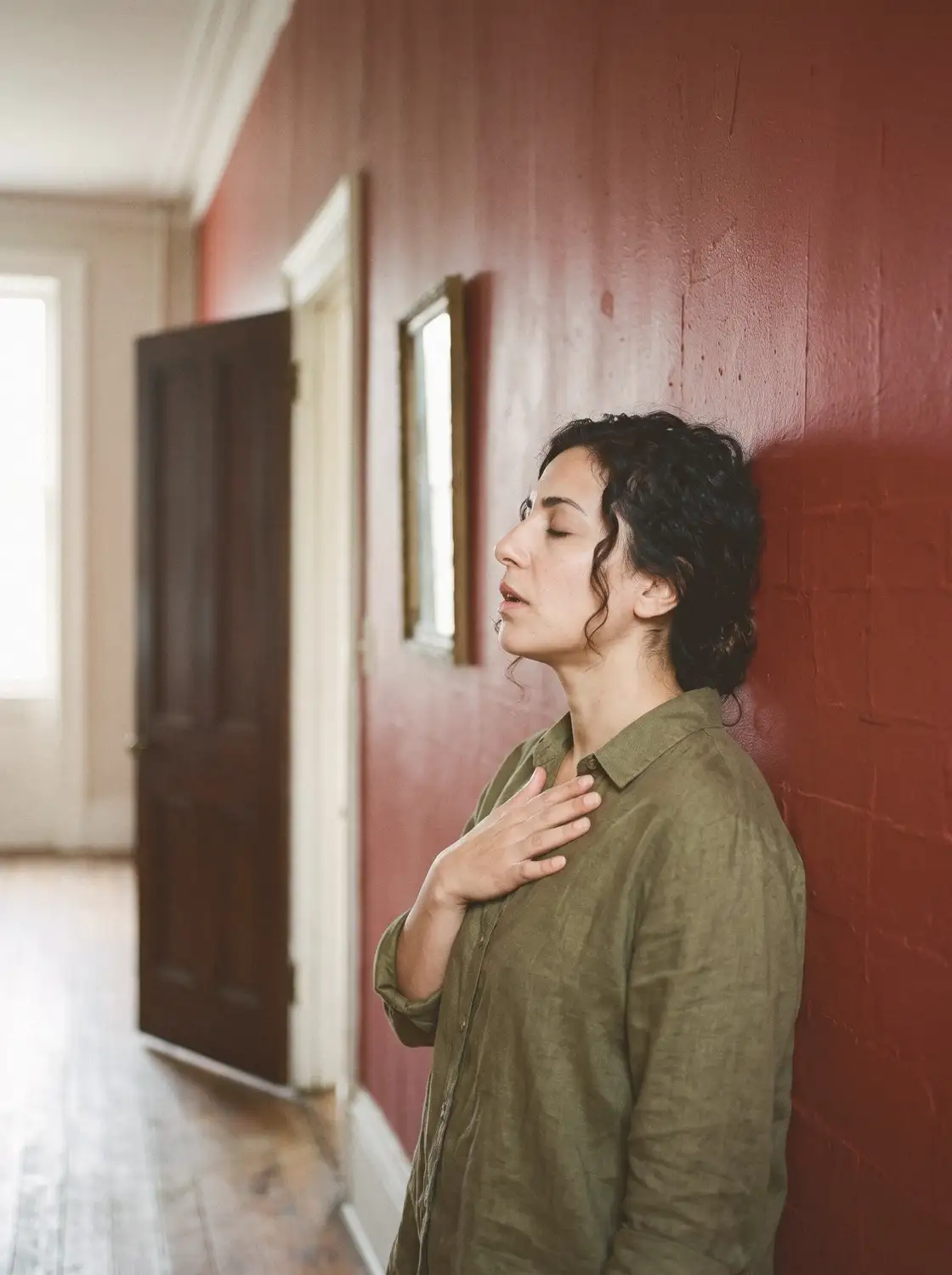
What breathing exercise helps with anger?
A long out-breath. It’s the opposite of what anger does to your breathing, and it’s quiet enough to do mid-meeting or mid-argument. Across a meeting table,  Breathform on Apple Watch can mark each turn with a tap on your wrist.
- Let go of your hands. Open them, drop your shoulders and unclench your jaw.
- Breathe in through your nose for 4 seconds.
- Pause for 2 seconds. Soft, not held tight.
- Breathe out slowly for 6 seconds, through your nose or softly parted lips. Feel the heat leave with it.
- Repeat for 1 to 3 minutes, 5 breaths a minute. If the pause makes you tense, skip it: in for 4, out for 6.
Why do breathing exercises for anger work?
Anger revs you up: your heart speeds up, your breath gets quick and high, your muscles get ready. A slow out-breath turns the volume down, a little at a time. It won’t change what happened, but it changes the state you answer from.
A review of 154 studies with more than 10,000 people compared two kinds of anger tools. Calming ones, such as slow breathing, relaxation and meditation, reduced anger and aggression. Ones that rev you up, such as hitting a punchbag or going for a run, made little difference overall (Kjærvik and Bushman 2024).
Slow breathing on its own points the same way. In a review of 58 trials of heart rate variability biofeedback, which trains slow breathing with a sensor, anger was among the outcomes that improved most (Lehrer et al. 2020). A smaller review linked slow breathing to fewer feelings of anger, in small studies that weren’t randomised trials (Zaccaro et al. 2018).
So: when you’re angry, calming down works better than letting off steam, and a slow breath is a simple way to start.
How well each breath is studied
- 4-2-6 breathingSome evidence
- 4-6 breathingWell studied
Every study on this page (3)
- Kjærvik and Bushman, 2024: Meta-analysis of 154 studies (10,189 participants): arousal-decreasing activities such as deep breathing, relaxation and meditation reduced anger and aggression; arousal-increasing activities such as hitting a bag or jogging were ineffective overall. Effects held across delivery methods (apps, researchers, therapists).
- Lehrer et al., 2020: Across 58 trials, breathing guided by live heart-rhythm feedback brought modest benefits, most for anxiety, low mood and performance, least for sleep.
- Zaccaro et al., 2018: In 15 small studies of healthy people, slow breathing was linked with feeling more relaxed and alert, and less anxious.
How do I calm down after an argument?
- Say one line, calmly: “I need a few minutes. I’ll come back.” Then go.
- Somewhere else, even the hallway or the bathroom, open your hands and let three slow breaths out.
- 4-2-6 breathing for 2 minutes. If the argument replays in your head, come back to the count.
- Notice your voice. When it sounds like yours again, you’re ready.
- Go back and say what you meant to say, more slowly than you would have.
Is it OK to walk away to breathe?
Yes, as long as you say you’re coming back. Walking out in silence can feel like punishment to the other person. “I need five minutes, I’ll come back” tells them it’s a pause, not the end. Then keep your word.

Too angry to count? Try a cooling breath.
When counting feels impossible, change how the air comes in. Cooling breath, from yoga, draws air in over a curled tongue (or through your teeth, if you can’t curl it), so it feels cool on the way in. The player keeps the count for you.
- Curl your tongue into a tube, or rest your teeth together with your lips apart.
- Breathe in slowly through your mouth for 4 seconds. Feel the cool air.
- Close your mouth, pause for 2 seconds, then breathe out through your nose for 6.
- Five or six breaths is plenty.
It’s a traditional practice that hasn’t been tested much on its own; the slow out-breath is likely doing most of the work. More in cooling breath. If you’d rather go straight back to calm, how to calm down has the quickest breath on the site.
Can breathing help with anger in kids?
Yes, with a game rather than a count. Children can blow up an imaginary balloon slowly, or blow out birthday candles one at a time, or let it out with a lion’s breath. Breathing with them helps more than telling them to breathe. Breathing exercises for kids has more, and when anger is mixed with worry, breathing exercises for anxiety is the place for grown-ups.
Questions people ask
Does deep breathing help with anger?
Slow breathing does. Deep isn’t quite the right word: big gulps of air can leave you light-headed and even more on edge. What helps is a long, unhurried out-breath, longer than the in-breath. Think of letting the air out of a tyre slowly rather than filling your lungs to the top.
Is punching a pillow good for anger?
It feels like a release, but it doesn’t seem to bring anger down. A review of 154 studies found that activities that wind you up, such as hitting a bag or going for a run, did little for anger overall. Activities that calm you down, like slow breathing, relaxation and meditation, reduced it.
Can breathing help with anger management?
Yes, as one of the tools. In a large review, calming techniques such as slow breathing reduced anger whether people learned them from an app, a researcher or a therapist, alone or in a group. If anger is causing trouble at home or at work, an anger management course or a therapist can add the rest.
What is 4-2-6 breathing?
It’s in for 4 seconds, a short 2-second pause, then out for 6. The pause gives each out-breath a clean start, and the long, slow out-breath helps the heat come down. A round takes 12 seconds, so a minute is 5 breaths. There’s a full guide in 4-2-6 breathing.
Practices in this guide
Read next
Technique · 5 min
Cooling breath (sheetali)Technique · 5 min
4-2-6 breathingGuide · 4 min
How to calm downLong read · 10 min
Breathing exercises for anxietyGuide · 4 min
Breathing exercises for overwhelm
More in Calm
Guide · 4 min
Breathing exercises for panic attacksGuide · 5 min
How to stop hyperventilatingGuide · 4 min
Breathing exercises for grief and low daysGuide · 6 min
Grounding techniquesLong read · 9 min
Breathing exercises to quit smokingIn the moment · 5 min
Nicotine cravings, breath by breathGuide · 4 min
Sugar cravings and stress eating
Breathe gently, never strain, and stop if you feel dizzy, light-headed or short of breath.