Technique6 min
Lamaze breathing (patterned breathing)
In 4 · out 6. Closest in the app: Unwind
Follow the tide: it rises as you breathe in and falls as you breathe out.
- Pattern
- In 4 · out 6
- Pace
- 6 breaths a minute
- Length
- 2 min · 12 rounds
- Evidence
- Some evidence
What is Lamaze breathing?
Lamaze breathing is a group of patterned breathing techniques for labour, named after Fernand Lamaze, a French obstetrician. In the 1950s he brought a method of preparing for birth, built on breathing and relaxation, back to Paris from the Soviet Union. It reached the United States through Marjorie Karmel’s 1959 book Thank You, Dr. Lamaze, and the organisation now called Lamaze International was founded in 1960.
For decades, “Lamaze” meant breathing to a strict count. Today it means something looser. Breathing is one of many comfort strategies taught in Lamaze classes, alongside movement, positions and support (Lothian 2011). Lamaze International now says there’s no single right way to breathe in labour: the right way is the one that helps you.
What are the Lamaze breathing patterns?
There are three, plus a breath that opens and closes each contraction. They get lighter as labour gets stronger. Each one plays here: press play and breathe along.
The cleansing breath: at the start and end of each contraction
One slow breath in, one long breath out with a sigh. It marks the start of the contraction, tells your body to soften and closes it again when it fades. Classes sometimes call it the organising breath.
Slow-paced breathing: early labour
The one to rely on, and the one most people use for most of labour: about half your usual breathing rate.
- Cleansing breath as the contraction starts.
- Breathe in through your nose for about 4 seconds. Let your belly soften.
- Breathe out through soft lips for about 6 seconds. Loosen your jaw, shoulders and hands.
- Keep the pace through the contraction, about 6 breaths a minute. If 4 and 6 feel long, use 3 and 5.
- Cleansing breath as it fades. Then rest.
Modified-paced breathing: active labour
When a contraction peaks and a slow breath feels out of reach, breathing gets lighter and quicker, then slows again as the contraction eases. Breathe high and light, in and out through your mouth.
- Start the contraction slow-paced.
- As it builds, let each breath get lighter and quicker: about 2 seconds in, 2 out, faster at the very peak if you need to.
- As it fades, slow back down, and finish with a cleansing breath.
- Keep it light, not deep. If you feel dizzy or your fingers tingle, slow down.
Patterned breathing (hee-hee-hoo): transition
The famous one. A few short, light breaths out, then a longer one: “hee, hee, hoo”. It gives your mind a rhythm to hold when contractions come close together, and helps if you feel an urge to push too early.
- Fix your eyes on one point: your partner’s face, a picture, a spot on the wall.
- Breathe in lightly, and out with a short “hee”. Do it again.
- Breathe in lightly, and blow out longer: “hoo”.
- Repeat through the contraction. Keep every breath small and easy, and slow down if you feel light-headed.
Breathing to push: second stage
Modern Lamaze doesn’t ask you to hold your breath and push to a count of ten. Most people push when they feel the urge, often breathing out, grunting or groaning as they push. Your midwife will guide you if you have an epidural, or as your baby’s head is born. Breathing techniques for labour covers this stage in more detail.
When do you use each Lamaze pattern?
Start slow and stay slow for as long as it works. Move to a lighter pattern only when you need to, and come back down whenever you can.
| Pattern | The count | One round | Pace | 6 rounds |
|---|---|---|---|---|
| Slow-paced | In 4 · out 6 | 10 s | 6 breaths a minute | 1:00 |
| Modified-paced | In 2 · out 2 | 4 s | 15 breaths a minute | 0:24 |
| Hee-hee-hoo | In 1 · out 1 · in 1 · out 1 · in 1 · blow out 3 | 8 s | 7.5 breaths a minute | 0:48 |
- Slow-paced: early labour, and for as long as it feels manageable after that.
- Modified-paced: the peaks of strong contractions in active labour.
- Hee-hee-hoo: transition, or any time you need to resist pushing.
- Your own way: many people drift into a rhythm of their own. That counts too, and if you find one while you practise,
 Breathform can keep it as your own pattern with Breathform Full.
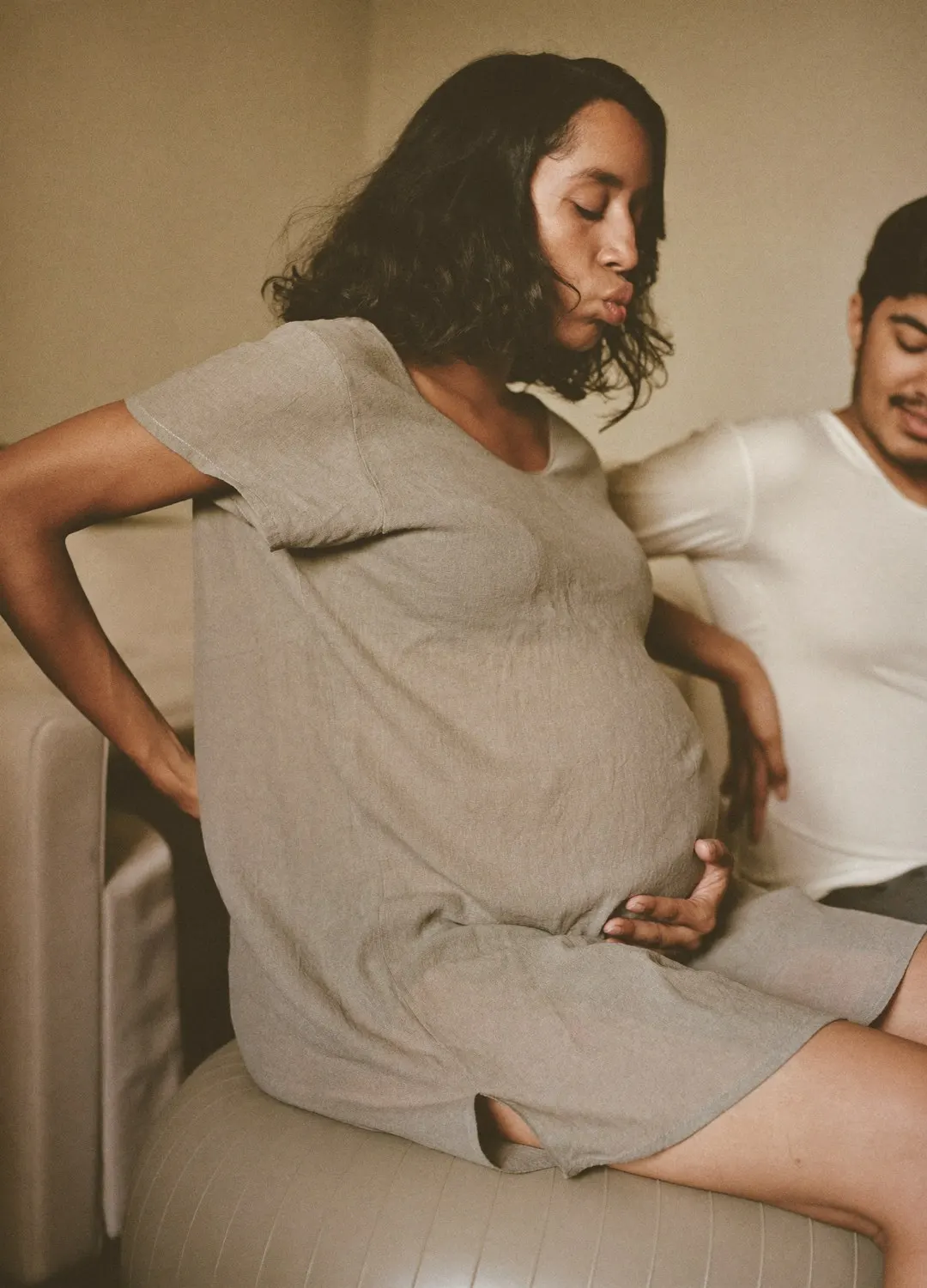
Do they still teach Lamaze breathing?
Yes, but differently. Lamaze classes still teach breathing, with more emphasis on slow, relaxed breathing and much less on strict counts and sounds. Lamaze International’s own advice is to breathe in whatever way helps, and to use it alongside moving, changing position and having support. Many antenatal classes teach similar slow breathing without the Lamaze name. Your midwife can show you how this fits your birth plan.
Does Lamaze breathing reduce pain?
Slow breathing seems to help. A 2023 narrative review of 7 studies concluded that breathing techniques, mostly slow and deep breathing in the first stage, help women in labour without harming their babies (Heim & Makuch 2023).
Strict patterns may add little. In a trial of 140 women in active labour, breathing patterns changed to match each stage didn’t lower anxiety or pain compared with usual care (Boaviagem et al. 2017). That’s one trial, but it fits Lamaze’s own move away from scripts.
So: learn the slow breath well, keep the lighter patterns in your back pocket and use whatever helps on the day. The same slow breath is the starting point in breathing exercises for pain and headaches.
Lamaze or hypnobirthing: which is better?
Neither has been shown to be better, and they overlap more than their names suggest. Both lean on slow breathing with a long out-breath.
| Feature | Lamaze | Hypnobirthing |
|---|---|---|
| Main breath | Slow-paced: in 4, out 6 | Up breathing: in 4, out 8 |
| At the peak | Lighter, quicker breaths; hee-hee-hoo | Stay slow; deep relaxation |
| Pushing | Follow the urge, breathing out | Down breathing: breathe the baby down |
| Feel | Active: focus, rhythm, patterns | Quiet: relaxation, visualisation |
If you like structure and something to do at the peak, Lamaze patterns suit you. If you’d rather go inward and stay slow, read hypnobirthing breathing. Plenty of people use a bit of both. For the months before, there’s breathing exercises for pregnancy, and Lamaze’s slow breath is the same pattern as 4-6 breathing.
Every study on this page (3)
- Lothian, 2011: Column in the Journal of Perinatal Education: controlled breathing enhances relaxation and decreases the perception of pain, and is one of many comfort strategies taught in Lamaze classes.
- Heim & Makuch, 2023: Narrative review of 7 studies of breathing as the only non-drug comfort method in labour: most used slow, deep breathing during first-stage contractions and breathing with pushing in the second stage; breathing techniques offered benefits without adverse effects on newborns.
- Boaviagem et al., 2017: Randomised trial of 140 women in active labour: breathing patterns matched to dilation did not change anxiety, pain, fatigue or satisfaction compared with routine care.
Questions people ask
What does hee-hee-hoo breathing do?
It gives your mind a simple rhythm to hold on to when a contraction is at its strongest, and it stops you holding your breath. The short puffs out can also help you hold off pushing if you feel the urge before your midwife says you’re ready. Keep it light: if you feel dizzy or tingly, slow it down.
Do you have to say “hee” and “hoo” out loud?
Only if it helps. Lamaze International says details like the sounds you make, your breathing rate or whether you use your nose or mouth matter only if they make a difference for you. Some people find the sound keeps the rhythm; others prefer silent puffs, a low moan or counting in their head. Use whichever keeps the out-breath easy.
When should I start practising Lamaze breathing?
A few weeks before your due date is plenty, and earlier is fine. Practise the slow-paced breath for a few minutes most days, and try the lighter patterns once or twice a week, briefly, so they feel familiar. Practising with your birth partner helps them learn the pace, so they can breathe it beside you on the day.
Can you use Lamaze breathing with an epidural?
Yes. Breathing works alongside any kind of pain relief, and using one doesn’t mean you’ve given up on the other. Before an epidural, slow breathing can help you through contractions. After it, breathing still helps you stay calm, and it’s useful when it’s time to push, especially if your midwife is guiding each push.
Read next
Guide · 6 min
Breathing techniques for labourSlow breaths for the early waves, lighter ones near the end.
Technique · 6 min
Hypnobirthing breathing (up and down breathing)Long, slow up-breaths for the waves, and a softer breath for the end.
Long read · 8 min
Breathing exercises for pregnancySlow, easy breaths for the months of waiting, and the nights.
Technique · 6 min
Pursed-lip breathingBreathe out slowly through softly pursed lips, as if blowing on a candle.
In 2 · out 4 · In the app: Ease
Technique · 5 min
4-6 breathing (a longer exhale)In for 4, out for 6: the longer half on the way out.
In 4 · out 6 · In the app: Unwind
More in People
Guide · 5 min
Postpartum breathing exercisesGuide · 5 min
Breathing exercises for teens and studentsGuide · 5 min
Breathing exercises for seniors and older adultsGuide · 6 min
How to breathe while running
Breathe gently, never strain, and stop if you feel dizzy, light-headed or short of breath.