GuidePeople6 min
Breathing techniques for labour
Contractions come in waves, and every wave ends. Breathing gives you something to do with each one: slow and low as it builds, lighter at the peak, a long breath out as it fades. Of all the breathing techniques for labour, that slow breath is the one to learn first. Practise it now, so it’s there when you need it.
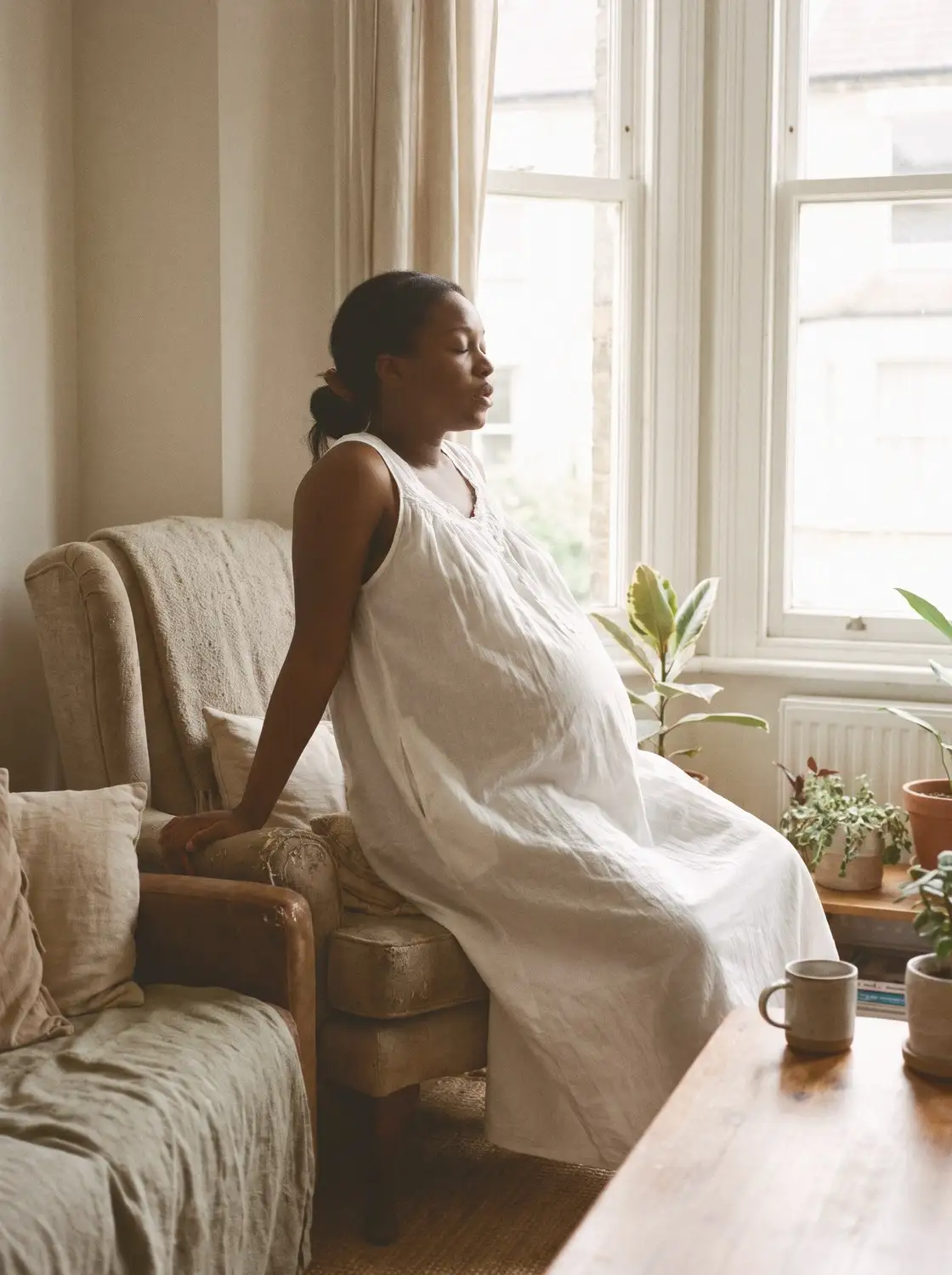
How do you breathe during contractions?
Slowly, with your attention on the out-breath. Each contraction has a shape: it builds, peaks and fades. Your breath follows the same shape.
- As it starts, take one slow breath in and let it go with a sigh. Drop your shoulders.
- Breathe in through your nose for about 4 seconds. Let your belly soften.
- Breathe out through soft lips for about 6 seconds. Loosen your jaw and hands.
- Stay with the out-breath. Count it, sigh it, moan or hum it: whatever keeps it slow.
- As it fades, take one more slow breath and let it go. Then rest, and breathe normally until the next one.
Which breathing techniques for labour help at each stage?
The same slow breath carries you a long way. What changes is how much you lean on it.
Early labour: slow breathing, and plenty of rest
Contractions are shorter and further apart, and you’re often at home. Use the slow breath for each one, then get on with something gentle: a bath, a walk, a film, a nap. Breathing exercises are one of the things guidance for midwives says may ease pain in early labour, alongside a shower or bath and massage (NICE).
Active labour: slow, then lighter at the peak
Contractions are longer and stronger. Start each one slow. If the peak feels too big for a long breath, let your breathing become lighter and quicker for a few breaths, then slow down again as it eases.
- Breathe in gently for 2 seconds.
- Breathe out softly for 4 seconds, through relaxed lips.
- Keep it light, and slow down if you feel dizzy or your fingers tingle.
Transition: breathe out in short puffs
Near the end of the first stage, contractions can come close together and feel overwhelming. Many people find a pattern helps here: two or three short breaths out, then one long one, the classic “hee, hee, hoo”. It’s also useful if you feel an urge to push before your midwife says you’re ready. Lamaze breathing has it step by step.
How should you breathe when pushing?
Mostly, let your body lead. Without an epidural, pushing when you feel the urge, often with a long breath out, a grunt or a groan, may shorten this stage compared with being told when and how hard to push (NICE). A Cochrane review found no single pushing style clearly better, and says your preference and comfort should guide it (Lemos et al. 2017).
With an epidural you may not feel the urge, so your midwife may guide each push. As your baby’s head is born, they may ask you to stop pushing and breathe in short, gentle puffs, so it comes slowly. Your midwife can show you how this fits your birth plan.
Does breathing help with labour pain?
A 2023 narrative review of 7 studies concluded that breathing techniques help women in labour, with no harm to their babies (Heim & Makuch 2023). A Cochrane review of relaxation methods found less pain in the early phase in one small trial, but no clear difference once labour was established, and rated the evidence low quality (Smith et al. 2018).
Rigid scripts may not add much. In a trial of 140 women in active labour, breathing patterns matched to each stage didn’t lower anxiety or pain compared with usual care (Boaviagem et al. 2017).
So: breathing takes the edge off rather than taking pain away (the same is true of breathing exercises for pain outside labour). It works best as one tool among several, with movement, water, support and pain relief if you want it, and whatever breath feels right on the day.
How well each breath is studied
- 4-6 breathingWell studied
- Pursed-lip breathingSome evidence
Every study on this page (5)
- Lemos et al., 2017: Cochrane review of 21 studies: no conclusive evidence for any one style of pushing (spontaneous or directed); the woman’s preference, comfort and clinical context should guide it.
- Heim & Makuch, 2023: Narrative review of 7 studies of breathing as the only non-drug comfort method in labour: most used slow, deep breathing during first-stage contractions and breathing with pushing in the second stage; breathing techniques offered benefits without adverse effects on newborns.
- Smith et al., 2018: Cochrane review of 19 studies (2,519 women): relaxation lowered pain intensity in the latent phase in one trial of 40 women; in the active phase there was no clear difference; evidence was low to very low quality.
- Boaviagem et al., 2017: Randomised trial of 140 women in active labour: breathing patterns matched to dilation did not change anxiety, pain, fatigue or satisfaction compared with routine care.
- Issac et al., 2023: Systematic review and meta-analysis of trials with 1,418 participants: breathing exercises were linked to a shorter second stage of labour.
How can my birth partner help with breathing?
By breathing with them, out loud and slowly. When contractions get strong, breathing tends to get quick and high. A calm voice and a slow out-breath to follow bring it back down.
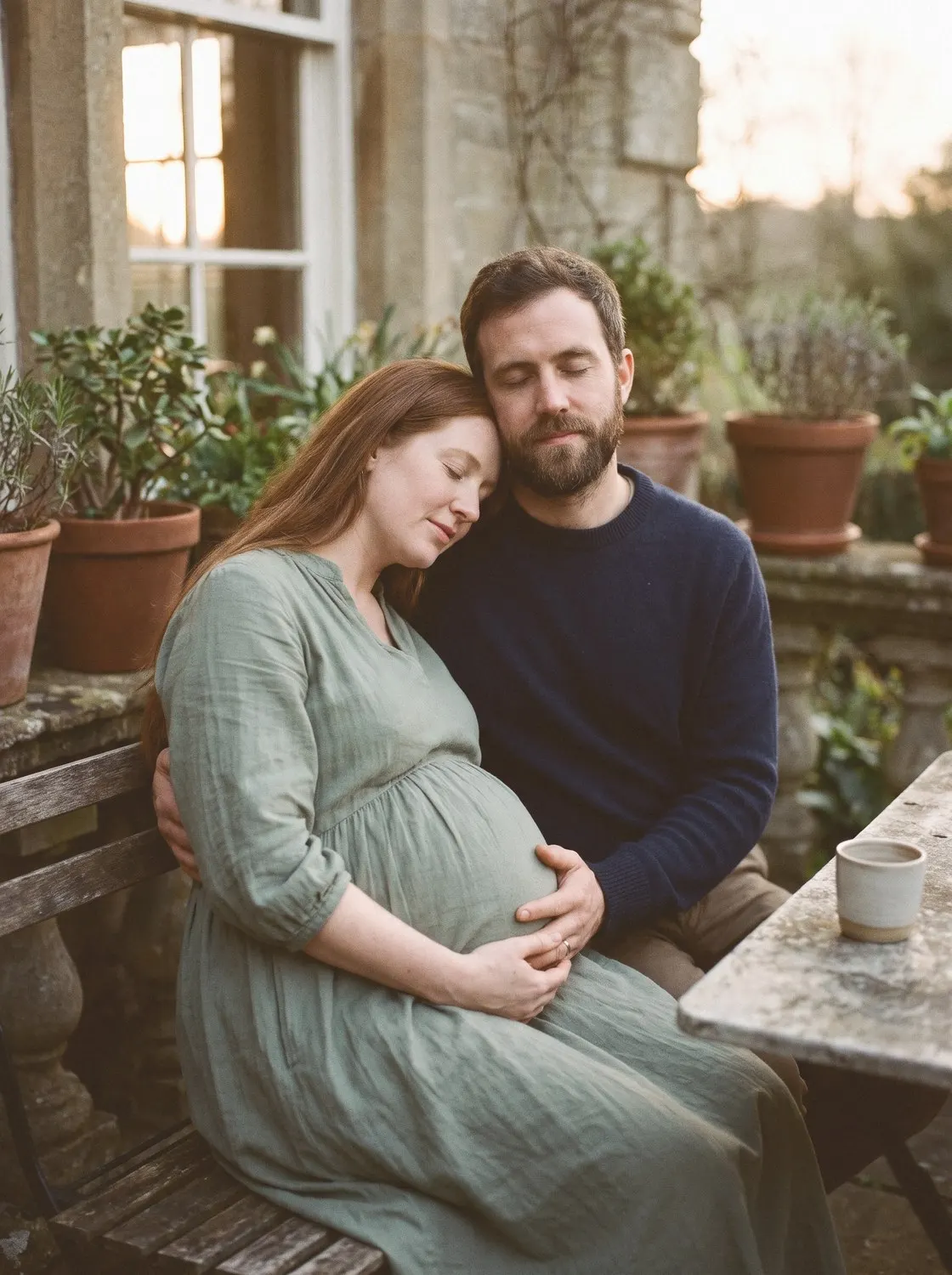
- Breathe it with them. Sit close and breathe the slow pattern audibly, a little slower than they are.
- Count the out-breath, or say one word as it goes: “down”, “soft”, “let go”.
- Keep it quiet during contractions. Talk between them, not during.
- Use your hands. A warm hand on the shoulders, and a quiet “drop them”, helps release tension.
- Practise together in pregnancy, so your voice and the breath already go together.
 Breathform’s soft tones give you both the same pace to learn.
When should I start practising labour breathing?
Now is good. A few minutes most days in the last couple of months helps the slow breath feel automatic.
Breathing exercises for pregnancy has a 5-minute daily routine, and hypnobirthing breathing adds a calm practice plan for the last weeks. For the days after the birth, there’s postpartum breathing.
Questions people ask
Should I breathe through my nose or mouth in labour?
Either is fine. Many people breathe in through the nose and out through the mouth, because a slow out-breath through soft lips is easy to control and to hear. Mouth breathing for hours can leave you dry, so keep sips of water or ice chips and some lip balm in your bag. Choose whatever keeps the out-breath slow.
Why do I feel dizzy or tingly when I breathe in labour?
Usually because you’re breathing faster or deeper than your body needs, which is easy to do when contractions are strong. Make the breaths smaller and slower, and let each out-breath take longer. The tingling in your fingers or lips normally fades within a minute or two. Tell your midwife if it doesn’t, or if you feel unwell.
Can I use breathing with gas and air or an epidural?
Yes. Gas and air takes a few moments to work, so midwives usually suggest starting it as a contraction begins and breathing it in slowly and steadily, which fits the slow breath on this page. With an epidural you may feel little, but breathing still helps you stay calm, and your midwife may guide your breathing when it’s time to push.
What if I forget the breathing in labour?
That’s common, and it doesn’t matter. Your body will keep breathing without you. Your birth partner or midwife can breathe slowly beside you, and you can simply follow them. Coming back to one long out-breath is enough. Moaning, sighing or humming on the out-breath all count, so don’t worry about how it sounds.
Does breathing make labour shorter?
It might shorten the pushing stage a little. A 2023 review of trials with 1,418 women found that breathing exercises were linked to a shorter second stage of labour. The trials varied a lot in method and quality, so take it as a possible bonus. The main reason to breathe slowly is that it helps you cope with each contraction.
Practices in this guide
Read next
Long read · 8 min
Breathing exercises for pregnancyTechnique · 6 min
Lamaze breathing (patterned breathing)Technique · 6 min
Hypnobirthing breathing (up and down breathing)Guide · 5 min
Postpartum breathing exercisesGuide · 5 min
Breathing exercises for pain and headaches
More in People
Guide · 5 min
Breathing exercises for teens and studentsGuide · 5 min
Breathing exercises for seniors and older adultsGuide · 6 min
How to breathe while running
Breathe gently, never strain, and stop if you feel dizzy, light-headed or short of breath.