KidsAges 3 to 84 min
Animal breaths for kids
Sniff like a bunny, hiss like a snake, buzz like a bee, roar like a lion. Children will do almost anything if an animal does it first, including breathe slowly. Start with the bee.
What are the best animal breaths for kids?
Four animals cover most moments: the bunny for excitement, the snake for crossness, the bee for sleepy or sad, the lion for frustration. Each one below plays here, with counts for small lungs. Let your child pick the animal: choosing is half the fun.
What is bunny breathing?
Three quick little sniffs in through the nose, like a bunny smelling the air, then one long breath out. The sniffs use up some of a child’s fizz. The long breath out brings them back down.
- Sit up tall, hands up by your head as bunny ears.
- Sniff, sniff, sniff through your nose.
- Breathe out slowly through your mouth for 4 seconds, ears flopping down.
Good for: big excitement, a party, upset that needs settling fast.
What is snake breathing?
A slow breath in through the nose, then a long, soft hiss out: “sssssss”. The hiss makes the breath out last much longer than the breath in, without anyone counting.
- Breathe in through your nose for 3 seconds.
- Hiss out like a snake for 5 seconds, as long and quiet as you can.
- See whose snake can hiss the longest without getting loud.
Good for: crossness, grumpiness, a child who needs a minute.
What is bumble bee breathing for kids?
A breath in through the nose, then a hum out, lips closed: “mmmmm”. Children can feel the buzz in their lips and cheeks, which makes it easy to keep going. It’s the playful version of a yoga practice called bhramari: humming bee breath.
- Breathe in through your nose for 3 seconds.
- Hum out like a bee for 5 seconds, lips closed.
- Older children can gently cover their ears with their fingers to hear the buzz inside.
The bee plays at the top of this page. Good for: sleepy, sad or overwhelmed moments, and bedtime.
What about lion’s breath?
The loud one. A breath in through the nose, then mouth wide open, tongue out, and a big breathy “haaa”. It’s the animal for frustration: it lets the feeling out, and the face-pulling makes lots of children laugh. Follow it with a quieter animal. There’s a full guide, with a classroom version, in lion’s breath.
What is teddy bear breathing?
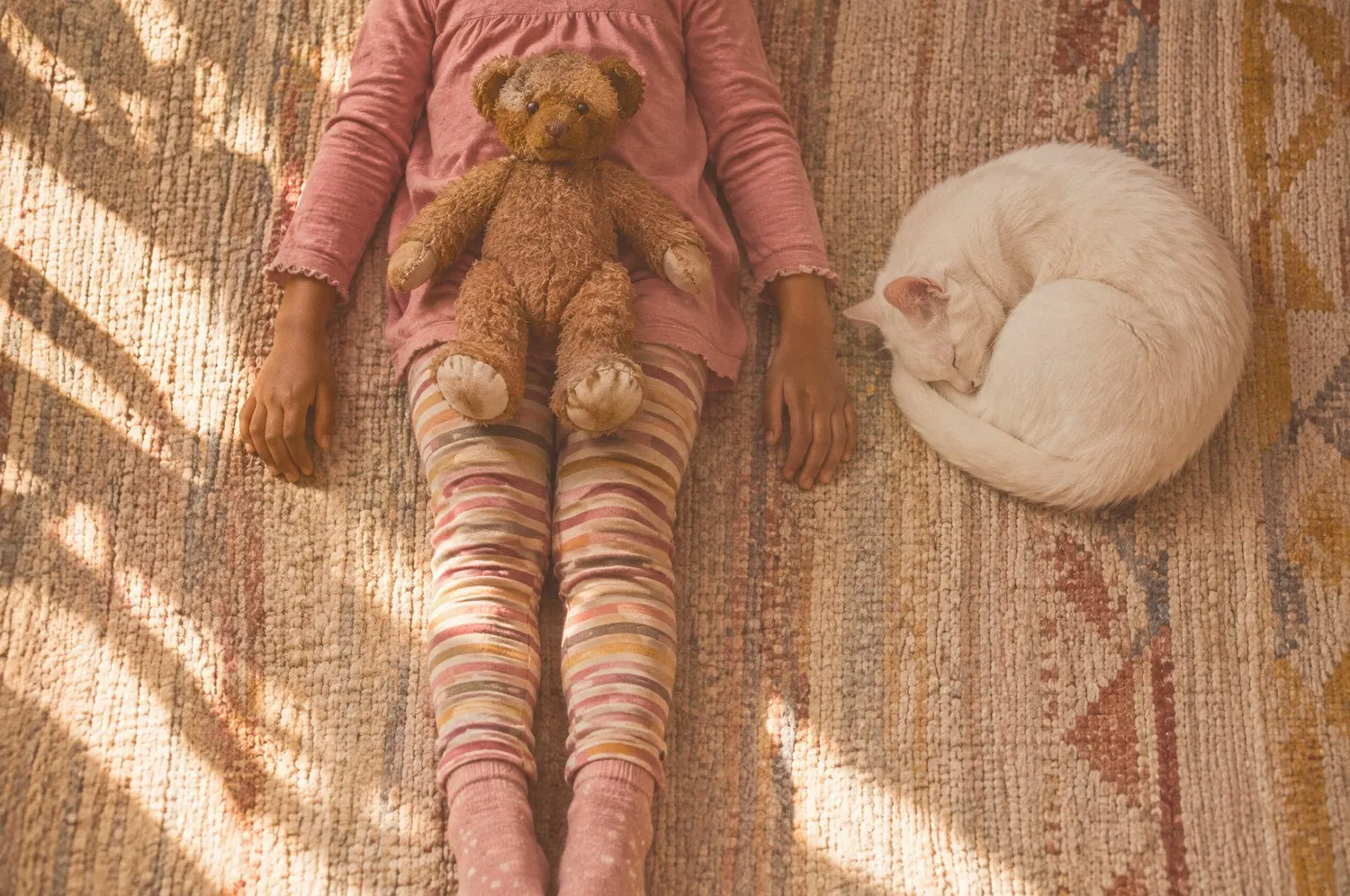
The bedtime animal. Lie down and put a teddy on your tummy. Breathe in slowly and watch teddy ride up, breathe out and watch him ride back down. It’s balloon breathing with a passenger, and it’s at the heart of breathing exercises for kids to sleep.
What is dragon breathing?
A warm, slow breath out, like a sleepy dragon warming its claws. Breathe in through the nose, then breathe out through an open mouth onto your hands, long and warm: “haaah”. It’s a gentle dragon, not a fiery one. The slower it breathes, the longer the warmth lasts.
Which animal breath is best for calming down?
The snake and the bee: they have the longest breaths out, the part most likely to help a body settle. The bunny suits a child who’s too excited to start slowly. The lion suits frustration, followed by a quieter animal. If your child has a favourite, that’s the best one. Grown-ups can have one too: the snake’s long breath out is close to Unwind, free in  Breathform. For quieter breaths with no animals, try smell the flower, blow out the candle, or the full set in breathing exercises for kids.
Do animal breaths really help?
Animal breaths haven’t been studied as a set. What they share is a long breath out. In a small study of 10 young men, breathing in for 4 seconds and out for 6 raised heart-rhythm signs of rest compared with their usual breathing (Komori 2018). It couldn’t tell the long breath out apart from the slower pace, and both may play a part.
So: playful ways to lengthen the breath out, resting on small studies in adults.
How well each breath is studied
- Humming bee breathSome evidence
- Pursed-lip breathingSome evidence
Every study on this page (1)
- Komori, 2018: In 10 young men, breathing in for 4 seconds and out for 6 raised heart-rhythm signs of calm; rapid breathing lowered them.
Questions people ask
How many animal breaths should we do?
Three to five breaths of one animal, about 30 seconds, is plenty. If your child is enjoying it, make an animal parade: three bunnies, three snakes, three bees, finishing with the quietest. Ending on the bee or a sleepy snake leaves the body slower than it started, which is the point of the game.
What if my child gets silly?
Let them, for a minute. Silly is a fine way in, especially with the lion and the snake. Then make the next animal a quiet one: a tiny bee hum, or a sleepy snake that can only whisper its “sss”. The quieter animals bring the energy down without you having to ask.
Can grown-ups do animal breaths?
Yes, and children enjoy it far more when you do. The bee is a real practice for adults too: humming bee breath, or bhramari, from yoga. The snake is a long, slow breath out, the sort adults use to calm down. Doing them together means you both slow down, not just your child.
Read next
Kids · 8 min
Breathing exercises for kidsKids · 4 min
Lion’s breathTechnique · 6 min
Humming bee breath (bhramari)Kids · 4 min
Balloon breathingKids · 4 min
Smell the flower, blow out the candle (hot chocolate breathing)
More in Kids
Kids · 4 min
Rainbow breathingKids · 4 min
Star breathingKids · 3 min
Lazy 8 breathing (figure 8 breathing)Kids · 4 min
Box breathing for kidsKids · 4 min
Breathing exercises for kids to sleepKids · 5 min
Breathing exercises for the classroomKids · 4 min
Five-finger breathing (hand breathing)
Breathe gently, never strain, and stop if you feel dizzy, light-headed or short of breath.