In the momentEveryday5 min
Breathing for flight anxiety
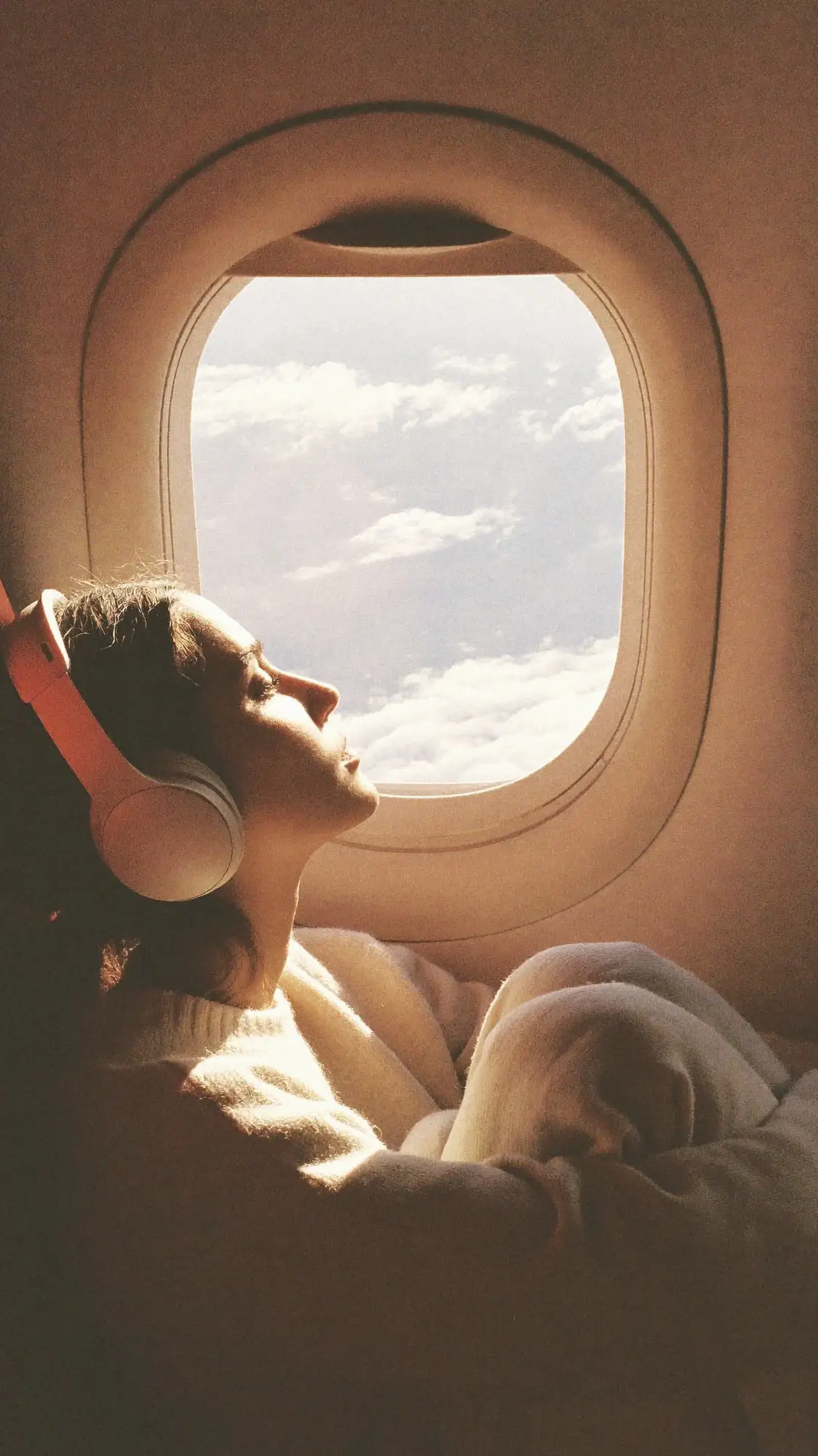
The doors close, the engines rise and your body decides something is wrong. A slow out-breath is how you tell it otherwise. One routine for take-off, one for the bumps, both fine in flight mode.
4-6 breathing · In 4 · out 6
What breathing helps with flight anxiety?
A breath with a longer out-breath and no holds. Fear speeds your breathing up and pushes it into your chest: quick, high, sometimes held. Slowing the out-breath works against all three, and a breath with no holds is easy to keep going when your heart is thumping.
Practise before the day. A few minutes of 4-6 breathing at home, then again at the gate, means your body already knows the rhythm when the engines rise. Under stress, a familiar breath is easier to reach for than a new one. Practise with  Breathform and the same soft tones come with you on board, signal or not.
- Sit back with your feet flat and your hands resting on your thighs.
- Breathe in through your nose for 4 seconds, low into your belly.
- Breathe out for 6 seconds, slowly, through your nose or softly parted lips.
- Keep going for as long as you need. The taxi and the climb often take 15 minutes or more. If 6 feels long, try 3 in and 5 out.
More on this breath in 4-6 breathing.
Routine · 15 minutes
A breathing routine for take-off
- At the gate: 4 rounds of box breathing, about a minute. If you’re using this page, open it while you have signal. The app needs none.
- In your seat: belt on, feet flat, hands heavy. Pick something steady to rest your eyes on.
- Doors closed, taxi and take-off: 4-6 breathing, round after round. Let the engine noise be noise: breathe out through it.
- Seatbelt sign off: let the count go. Roll your shoulders, have a sip of water and breathe however you like.
How do you stay calm during turbulence?
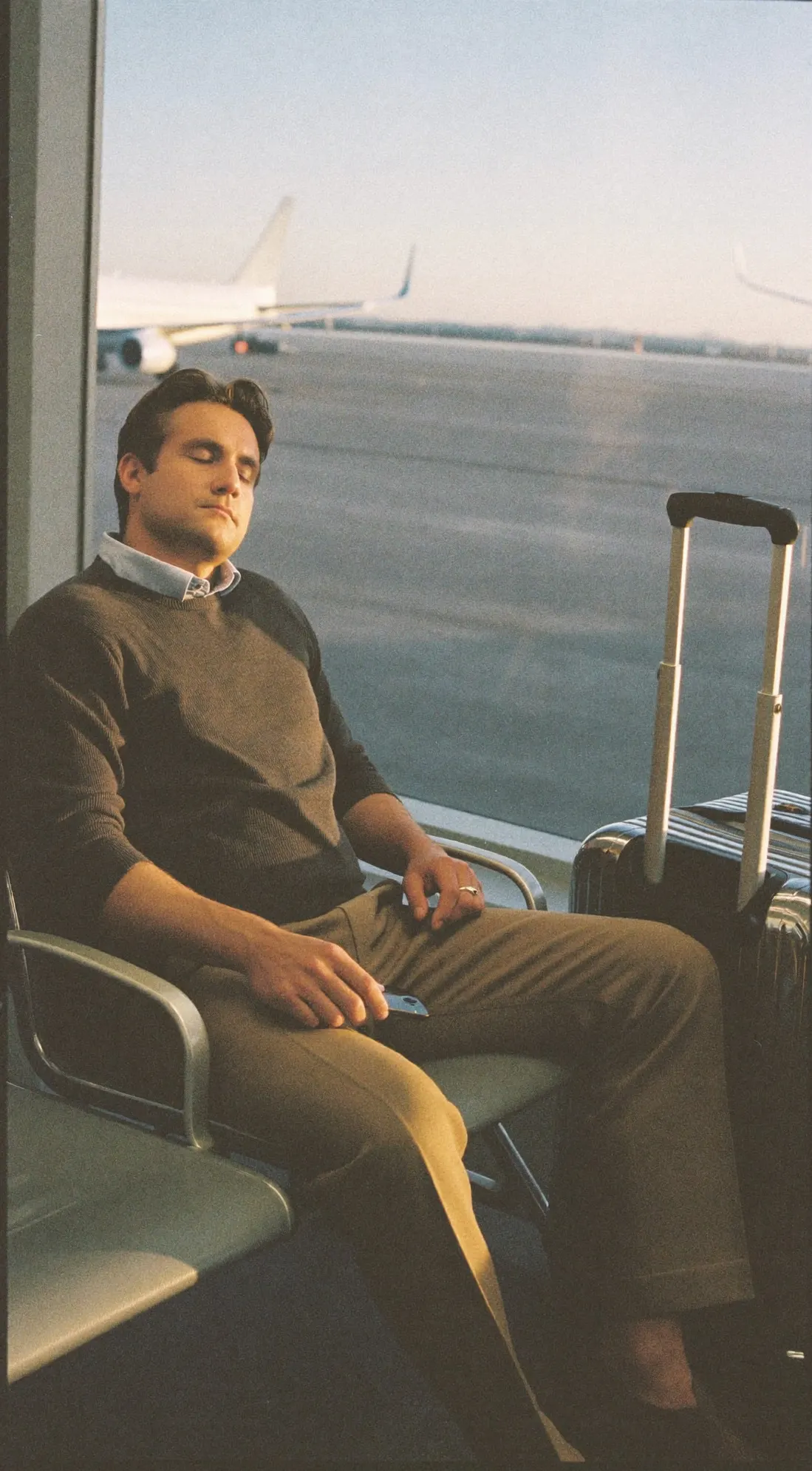
Turbulence feels like danger, so your body braces: you grip the armrests, lock your shoulders and hold your breath. Bracing can make every bump feel bigger. The bumps routine does the opposite.
- Feet flat on the floor, pressing down gently. Notice the floor holding you.
- Hands heavy on your thighs or the armrests, open, not gripping.
- Breathe out longer than you breathe in: in for 4, out for 5 or 6. Let your body move with the seat.
- On each out-breath, soften one thing: jaw, shoulders, hands, stomach.
This is Ground, a breath that pairs a slightly longer out-breath with attention to where your body meets the seat and the floor. More in grounding breathing.
The one rule worth following: keep your seatbelt fastened whenever you’re in your seat, which is the FAA’s main advice on turbulence. People who are belted in are very rarely hurt by it.
What helps when the plane drops?
That lurch in your stomach is the worst moment, and it passes quickly. Breathe out through it, long and slow, rather than gasping in. Let your shoulders drop and your jaw go loose. Then the next out-breath, and the next. If it helps, say a word to yourself on each one: “bump”, or “through”.
How do you relax on a long flight?
Once you’re in the air, give yourself something steady to do every so often. Ten minutes of slow breathing with your headphones on, a quiet hum that nobody will hear over the engines, a walk to the back of the plane. Hydrate, and get up when you can.
If you’d like to sleep, the slow breaths in breathing exercises for sleep work in a plane seat too: 4-6 breathing with your eyes closed, or four rounds of 4-7-8. If you’d rather work, breathing exercises for focus has a short routine to settle into it.
Does breathing really help with fear of flying?
We know of no trial of breathing on an actual flight. For anxiety in general, there’s a fair amount of research: a review of 40 trials found breathing-focused treatments reduced anxiety more than control conditions, with smaller gains against other active treatments. Most of those trials were at high risk of bias (Leyro et al. 2021).
Single sessions help in the moment too. In a lab trial, 5 minutes of box breathing, or of one long out-breath every 30 seconds, before a stressful test blunted the rise in heart rate and anxiety compared with normal breathing (McAllister et al. 2026). In another small study, one 5-minute session lowered anxiety, though without a comparison group (Magnon et al. 2021).
So: breathing is a good tool for the body’s side of the fear. It isn’t a test you pass or fail. If a bump comes and the fear rises anyway, that’s normal: keep breathing out, and let it pass.
If fear of flying stops you travelling, a fear-of-flying course or a therapist can take you much further than breathing alone. For the nerves of other big moments, see breathing exercises for public speaking and exams.
How well each breath is studied
- 4-6 breathingWell studied
- Box breathingSome evidence
- Grounding breathingSome evidence
Every study on this page (3)
- Leyro et al., 2021: Across 40 trials with 3,047 people, breathing-based therapies eased anxiety more than comparison groups, but most trials had design flaws.
- McAllister et al., 2026: In 66 adults facing a stress test, box breathing or a long out-breath beforehand softened the rise in heart rate and anxiety.
- Magnon et al., 2021: In 47 younger and older adults, anxiety was lower after one five-minute slow-breathing session, though the study had no comparison group.
Questions people ask
Do breathing exercises work in flight mode?
Yes. Open this page before you board and the players keep working once it has loaded, with no signal needed. The Breathform app works fully offline too, with soft tones for each breath (and a tap on your wrist with Apple Watch), so you can keep your eyes closed through take-off. Try it once at home first, so you know where everything is.
Should I tell the cabin crew I’m a nervous flyer?
Yes, if it would help. Crew are used to nervous passengers, and a quick word as you board means someone knows. They can tell you what the bumps or noises are, check on you during turbulence or find you a moment of quiet. You don’t have to explain anything beyond “I’m a nervous flyer”.
What do I do if I have a panic attack on a plane?
Stay seated, belt on, and breathe out slowly, longer than you breathe in, with no holds. Feel your feet and the seat under you. A panic attack is frightening, but it isn’t dangerous, and it passes. Tell the crew if you can. There’s a breath for that moment in breathing exercises for panic attacks.
Can breathing help with nausea when flying?
It can help a little. Slow breathing with a longer out-breath keeps your body calmer, and fresh air from the overhead vent, eyes on the horizon and small sips of water help too. For queasiness more generally, see breathing exercises for nausea, which has a breath you can do sitting still.
Practices in this guide
Read next
In the moment · 5 min
Breathing exercises for public speakingTechnique · 5 min
Grounding breathingGuide · 4 min
Breathing exercises for panic attacksGuide · 4 min
Breathing exercises for nauseaTechnique · 5 min
4-6 breathing (a longer exhale)
More in Everyday
Long read · 7 min
Breathing exercises for focusIn the moment · 4 min
Breathing exercises at workIn the moment · 4 min
Morning breathing exercises: a 3-minute routineGuide · 5 min
How to stop doomscrolling
Breathe gently, never strain, and stop if you feel dizzy, light-headed or short of breath.