KidsAges 3 to 104 min
Breathing exercises for kids to sleep
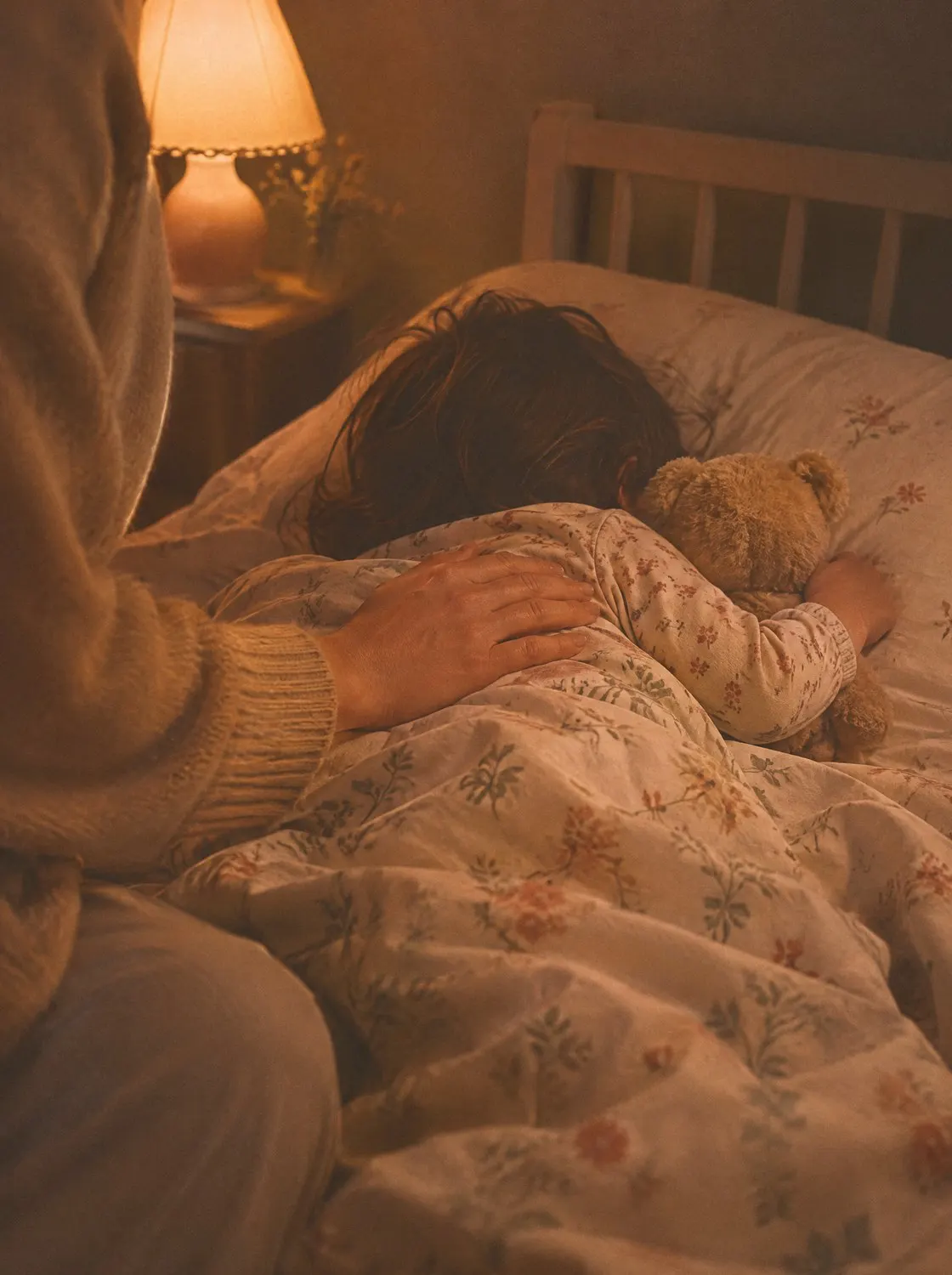
Lights low, teddy on the tummy. Breathe in and teddy rides up, breathe out slowly and teddy rides down. Six slow breaths, and the day starts to let go.
What are the best breathing exercises for kids to sleep?
Slow ones with a long breath out, done in bed with the lights already low. Three to choose from, all quiet enough for a shared room.
Teddy bear breathing
The balloon at the top of this page. A teddy on the tummy gives a child something to watch, and the slow ride down is the part that settles. Press Start, then dim the screen or turn it away and just watch teddy.
A sleepy bee hum
A soft hum on the breath out, lips closed, so quiet only you two can hear it. The hum stretches the breath out on its own. Good for a child who likes a sound, or who can’t stop chatting.
4-6 breathing, for older children
From about 7, children can follow the grown-up rhythm: in for 4, out for 6, no counting out loud, eyes closed.
A 3-minute bedtime breathing routine to read aloud
Read it in a whisper, slower than feels natural, and breathe along yourself.
- Settle. “Let’s get comfy. Lie on your back. Put teddy on your tummy.”
- Teddy rides. “Breathe in through your nose… teddy goes up. And breathe out, slowly… teddy goes down.” Six times.
- Sleepy bee. “Now let’s be sleepy bees. Breathe in… and hum, very quietly… mmmmm.” Five times.
- Heavy. “Let your arms go heavy. Let your legs go heavy. Let your breathing go slow, all on its own.”
- Goodnight. “Goodnight, breath. Goodnight, teddy.” No more instructions. Stay a moment, breathing slowly.
How do I calm my child down before bed?
Start slowing down before the breathing starts. Dim the lights, lower your voice, and keep the last half hour in the same order each night, so the routine itself signals sleep. Then breathe together in bed. The most useful thing you bring is your own slow breathing: it gives your child a pace to fall in with.
Can breathing help kids who wake up at night?
Yes, and it needs no lights and no screen. Sit or lie close, put a hand gently on their tummy and breathe slowly enough for them to hear. Whisper “in… and slowly out” a few times, then go quiet and keep breathing. Don’t ask questions or check the time. For grown-ups who wake in the night too, see waking up at 3am;  Breathform keeps going with the screen locked, so it needn’t light up the room.
Does breathing really help kids sleep?
Breathing for children’s sleep hasn’t been studied much. In adults, a 2026 review of 9 studies with 457 people found slow breathing before bed improved how long and how well people said they slept, while sleep measured by devices and in sleep labs didn’t clearly change (Eide et al. 2026).
So: a calm, low-risk way to wind down together, not a switch for sleep.
How well each breath is studied
- 4-6 breathingWell studied
- Humming bee breathSome evidence
Every study on this page (1)
- Eide et al., 2026: Across nine studies, slow breathing before bed improved how well people felt they slept, but sleep-lab and tracker results were inconclusive.
What if my child won’t sit still to breathe?
They don’t have to. Lie down and do it yourself, out loud, with your own teddy, and let them join in when they like. Some children prefer to breathe on something: blow a feather off the duvet, hum a toy to sleep. Rainbow breathing traced on the ceiling with the eyes suits wrigglers, and balloon breathing works lying down. If tonight’s not the night, stop and try again tomorrow. For the grown-up version, see breathing exercises for sleep, and for daytime breaths, breathing exercises for kids.
Questions people ask
How long should a bedtime breathing routine be?
Two or three minutes is plenty for most children, and one minute counts. A routine that’s short enough to do every night works better than a long one you skip. Older children who like it can stretch to 5 minutes. If your child falls asleep halfway through, the routine has done its job.
Can I do bedtime breathing with two children?
Yes. Lie between them, or sit on the floor between beds, and lead it in a whisper. Give each child their own teddy to watch. Siblings often compete at first, so make the game about who has the slowest, quietest teddy. If one child doesn’t want to join in, let them listen: hearing you breathe slowly still helps.
Is it OK if my child falls asleep during it?
That’s the best possible ending. Nothing goes wrong if a child drifts off halfway: their breathing simply finds its own sleepy rhythm. Keep breathing slowly yourself for a few more breaths, then leave quietly, without finishing the count.
What is kids’ meditation for sleep?
Most sleep meditations for children are a gentle voice guiding them to notice their breath, relax their body or picture somewhere calm. The breaths on this page are the simplest part of that, without a screen: your voice, a teddy and a slow breath out. Some children like to picture a favourite place while they breathe, too.
Read next
Kids · 8 min
Breathing exercises for kidsKids · 4 min
Balloon breathingKids · 4 min
Rainbow breathingLong read · 9 min
Breathing exercises for sleepTechnique · 6 min
Humming bee breath (bhramari)
More in Kids
Kids · 4 min
Star breathingKids · 4 min
Smell the flower, blow out the candle (hot chocolate breathing)Kids · 3 min
Lazy 8 breathing (figure 8 breathing)Kids · 4 min
Animal breaths for kidsKids · 4 min
Lion’s breathKids · 4 min
Box breathing for kidsKids · 5 min
Breathing exercises for the classroomKids · 4 min
Five-finger breathing (hand breathing)
Breathe gently, never strain, and stop if you feel dizzy, light-headed or short of breath.