KidsAges 5 to 124 min
Box breathing for kids
Up one side, across the top, down the other side, along the bottom. Four short sides, four parts to every breath, and a square to follow while you do it.
How does box breathing for kids work?
Press Start on the square and follow the dot together. Say the sides out loud the first few times: up, across, down, along.
- Breathe in through your nose for 3 seconds as you go up the left side.
- Hold for 3 seconds across the top. Soft shoulders: it’s a pause, not a squeeze.
- Breathe out slowly for 3 seconds down the right side.
- Hold for 3 seconds along the bottom, back to the start.
- Four laps, about 50 seconds. If the holds feel tight, make them 2.
How do you explain box breathing to a child?
Keep it to the picture. “We’re going to draw a box with our breath. Breathing in goes up the side. Then we hold the breath while we go across the top. Breathing out comes down the other side, and we hold again along the bottom. Then we’re back where we started.” Trace a square in the air with one finger as you say it.
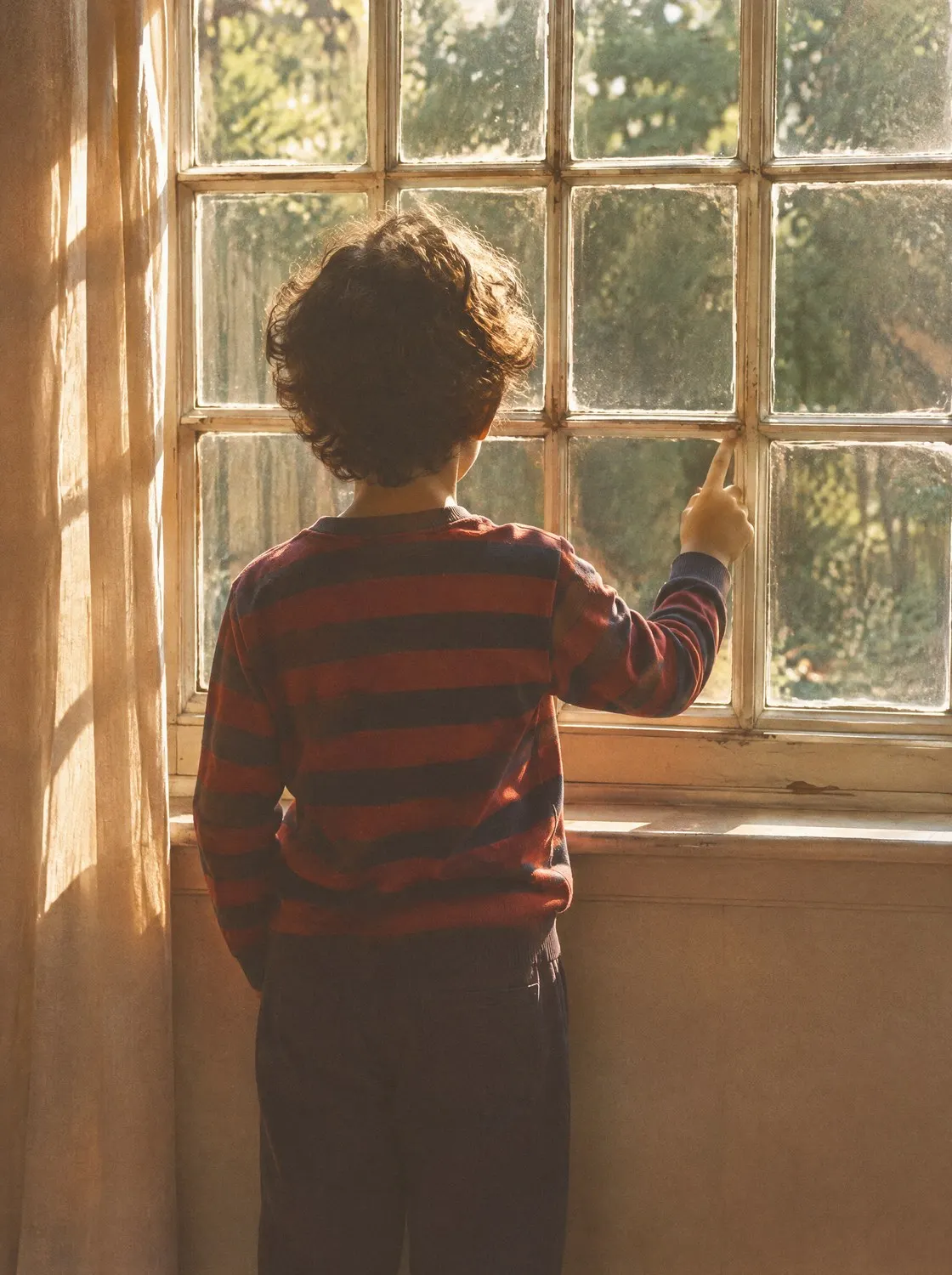
Once they know it, squares are everywhere: a window, a book, a tile, a door. Your child can trace one with their eyes anywhere, and nobody will notice.
What count should kids use for box breathing?
Smaller lungs, smaller counts. Children breathe faster than adults at rest, so the adult count of 4 can feel long. Start low and let the count grow with them.
| Pattern | The count | One round | Pace | 4 rounds |
|---|---|---|---|---|
| Ages 5 to 7 | In 3 · hold 2 · out 3 · hold 2 | 10 s | 6 breaths a minute | 0:40 |
| Ages 8 to 10 · default | In 3 · hold 3 · out 3 · hold 3 | 12 s | 5 breaths a minute | 0:48 |
| 11 and up | In 4 · hold 4 · out 4 · hold 4 | 16 s | 3.75 breaths a minute | 1:04 |
When should kids use box breathing?
Before something that matters: a test, a match, a show, the dentist, the first day back. In one study of 122 pupils aged 10 or 11, in four primary schools, those who took deep breaths before a timed maths test felt less anxious and scored higher than those who didn’t (Khng 2017). That wasn’t box breathing, and it was a single mock test with small gains.
Box breathing itself has been tested in adults. In one trial, 5 minutes of it before a stressful task led to a smaller rise in heart rate and anxiety than breathing normally (McAllister et al. 2026).
So: a sensible breath for a nervous moment, with early evidence in adults and very little yet in children.
Every study on this page (2)
- Khng, 2017: Pre-test/post-test controlled study of 122 Primary 5 pupils: taking deep breaths before a timed maths test reduced self-reported anxiety and improved test performance.
- McAllister et al., 2026: In 66 adults facing a stress test, box breathing or a long out-breath beforehand softened the rise in heart rate and anxiety.
Is 4-7-8 breathing OK for kids?
Children don’t need the long 7-second hold of 4-7-8 breathing, and it can feel uncomfortable. If it’s your own bedtime breath, keep it for you: it’s Relax in  Breathform, free. The part of 4-7-8 worth borrowing is the long breath out, and children can have that without the hold: breathe in for 3, out for 5. If your child likes a hold, triangle breathing gives them one short one.
For more breaths to share, see breathing exercises for kids and star breathing. Teachers will find a whole-class version in breathing exercises for the classroom.
Questions people ask
Is there a box breathing printable for kids?
Draw a big square and write one word on each side, starting bottom left: “in” going up, “hold” across the top, “out” coming down, “hold” along the bottom. Add three dots on each side to count. Your child traces it with a finger or a pencil, a lap at a time. Ready-made cards are collected on printable breathing exercises.
How long should kids hold their breath in box breathing?
Short, gentle holds of 2 or 3 seconds, sitting on dry land, are fine for most children. The hold should feel like a pause, not a squeeze, and it’s fine to skip it if it feels uncomfortable. Breath-holding games never belong in water, though: never practise holds in or near a pool, a bath or the sea.
Can teenagers do box breathing?
Yes. From about 11, most can use the adult count of 4 seconds a side, and many like that it’s the same breath athletes and some soldiers use. It’s handy before exams, matches and performances, and nobody can tell you’re doing it. The adult guide is box breathing.
What if my child doesn’t like the holds?
Drop them to 1 or 2 seconds, or leave them out and just trace in up one side and out down the other. The slow, steady pace matters more than the shape. Some children prefer triangle breathing, which has one hold instead of two.
Read next
Technique · 8 min
Box breathing (square breathing)Kids · 8 min
Breathing exercises for kidsKids · 4 min
Star breathingTechnique · 5 min
Triangle breathingKids · 5 min
Breathing exercises for the classroomTool · 3 min
Printable breathing exercises
More in Kids
Kids · 4 min
Rainbow breathingKids · 4 min
Balloon breathingKids · 4 min
Smell the flower, blow out the candle (hot chocolate breathing)Kids · 3 min
Lazy 8 breathing (figure 8 breathing)Kids · 4 min
Animal breaths for kidsKids · 4 min
Lion’s breathKids · 4 min
Breathing exercises for kids to sleepKids · 4 min
Five-finger breathing (hand breathing)
Breathe gently, never strain, and stop if you feel dizzy, light-headed or short of breath.