In the momentSleep5 min
Waking up at 3am? A breath for getting back to sleep
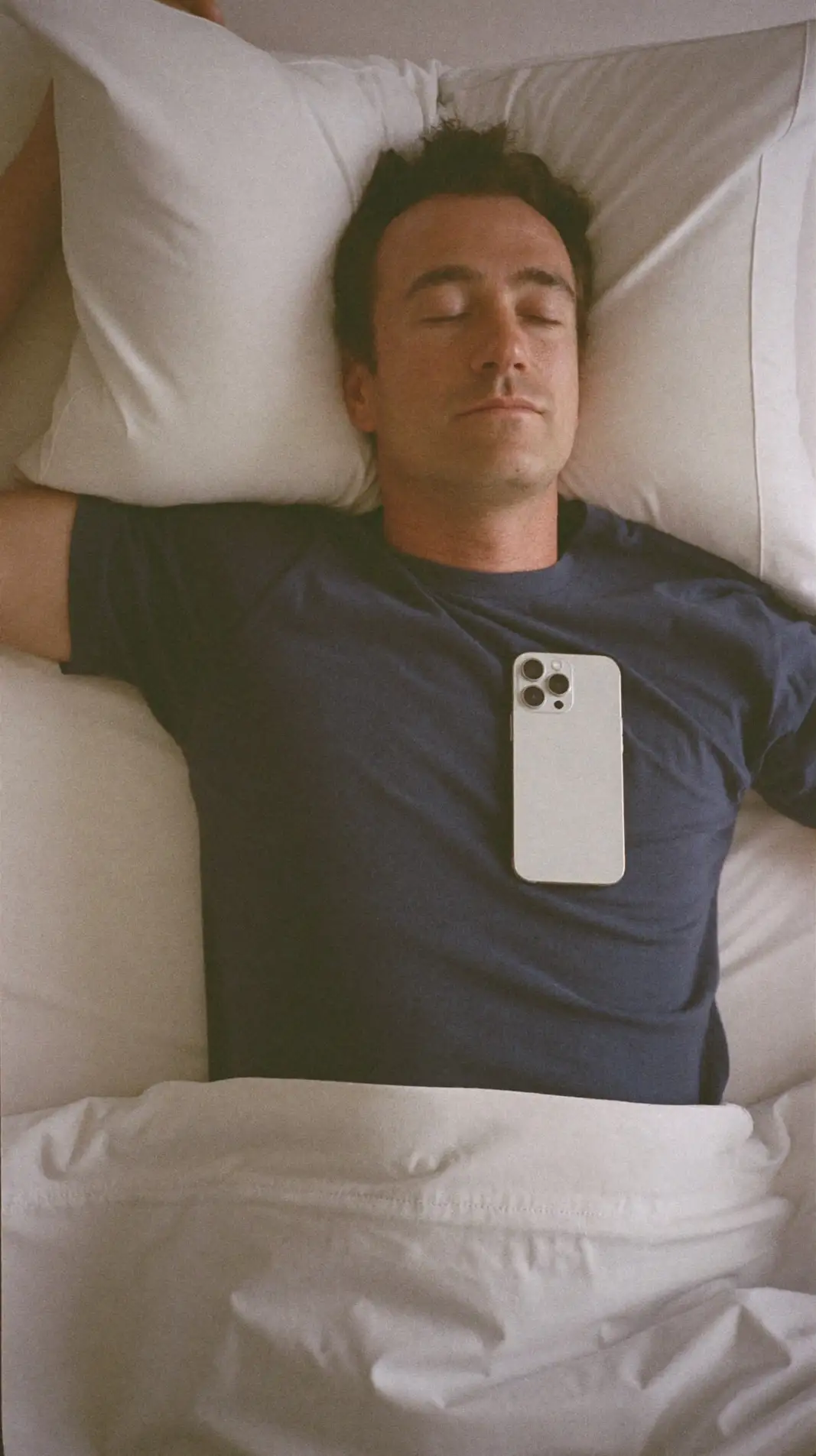
It’s dark, the house is quiet and your mind is wide awake. Leave the phone where it is. Stay put, and hum quietly with your lips closed.
Humming bee breath · In 4 · hum 6
What should you do when you wake at 3am?
Less than you think. Don’t reach for the phone, don’t switch on a light and don’t work out how many hours are left. Stay lying down, and give your mind a small, quiet job.
- Stay as you are, on your back or your side. Let your jaw go loose, lips closed.
- Breathe in through your nose for 4 seconds.
- Breathe out for 6 seconds with a soft, low hum, so quiet only you can hear it.
- Feel the buzz in your lips and cheeks. If a thought pulls you off, come back to the next hum.
- Keep going for a few minutes, then let the hum go and breathe however you like.
Humming lengthens the out-breath on its own, and you can feel it, which makes it easier to follow half asleep than a silent count. If a partner is asleep beside you, breathe out slowly through your nose instead. More in humming bee breath.
Should you check the time when you wake up?
Best not to. Once you’ve seen 3:12, your mind starts counting: hours left, how tired you’ll be, the meeting at nine. That counting is the thing that keeps you up.
In two experiments, people asked to watch a clock while falling asleep reported more worry and took longer to drop off than people who didn’t, good sleepers included. People with insomnia who watched the clock also overestimated how long they’d been awake (Tang et al. 2007).
Slow breathing itself has early evidence for sleep: in a 2026 review of 9 studies, people said they slept longer and better after slow breathing before bed, though sleep-lab measures were inconclusive (Eide et al. 2026). Humming is a natural way to slow down: in one small study it brought breathing to about 6 breaths a minute (Kim et al. 2026).
So: turn the clock to the wall tonight. It’s the easiest change on this page.
How well each breath is studied
- Humming bee breathSome evidence
- 4-6 breathingWell studied
- 4-7-8 breathingEarly research or tradition
Every study on this page (6)
- Tang et al., 2007: People told to monitor a clock while trying to fall asleep reported more pre-sleep worry and took longer to fall asleep than those who didn’t, in both good and poor sleepers; in people with insomnia, clock monitoring also made them overestimate how long they lay awake.
- Eide et al., 2026: Across nine studies, slow breathing before bed improved how well people felt they slept, but sleep-lab and tracker results were inconclusive.
- Kim et al., 2026: In 24 healthy adults, humming slowed breathing to about six a minute; that pace, not the sound, seemed to affect heart rhythm.
- Edinger et al., 2021: The American Academy of Sleep Medicine guideline suggests stimulus control (which includes getting out of bed when unable to sleep) as a single-component treatment for chronic insomnia in adults (conditional recommendation).
- Ohayon, 2008: In a telephone survey of 8,937 adults in three US states, 35.5% reported waking in the night at least three nights a week.
- Ebrahim et al., 2013: Across studies in healthy volunteers, alcohol at all doses shortened the time to fall asleep and consolidated the first half of the night, but increased sleep disruption in the second half.
Should you get out of bed if you can’t sleep?
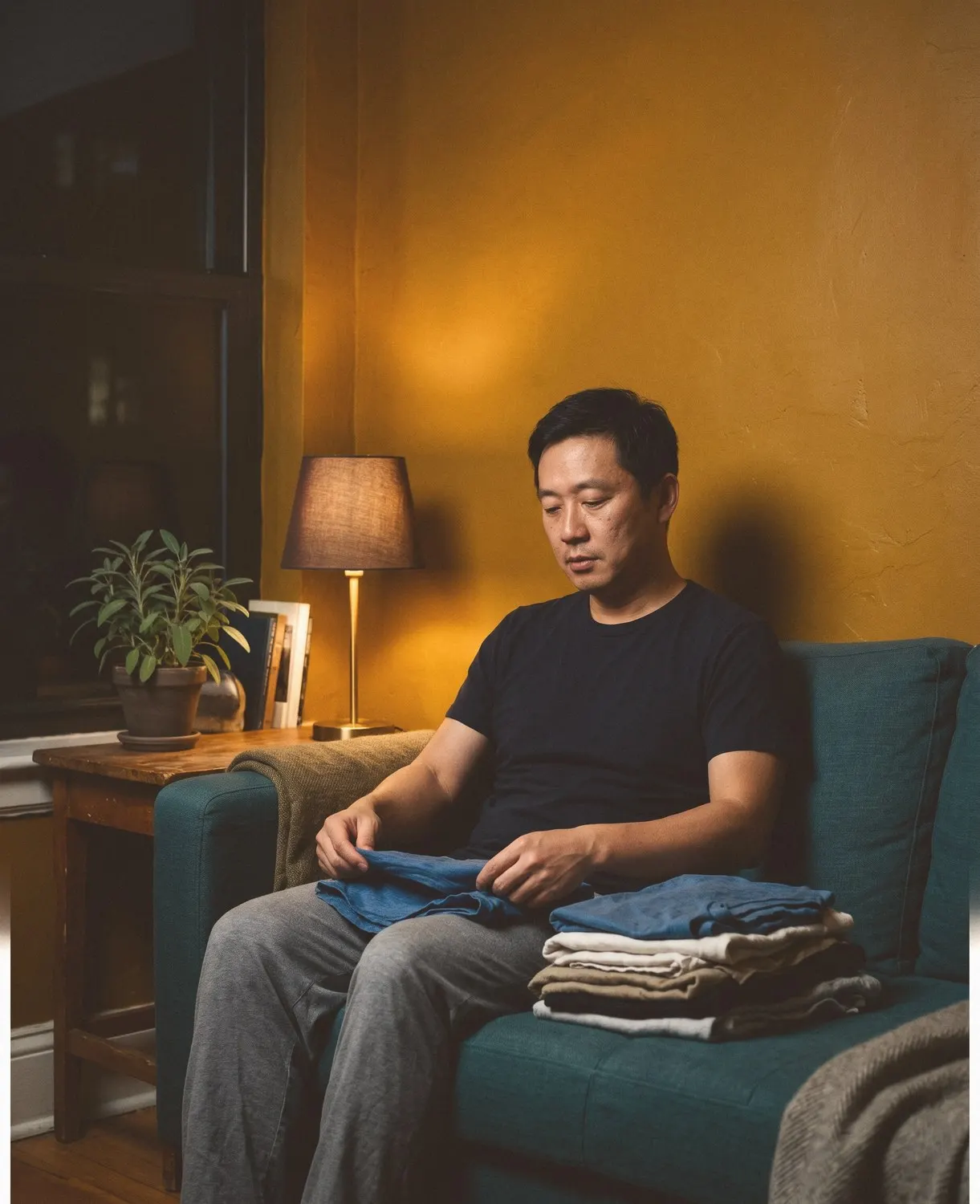
Yes, if you’ve been lying there wide awake for a while and it’s turning into a fight. Get up, go somewhere else with the lights low, and do something dull: a book you know, folding laundry, the breath again in a chair. Go back to bed when your eyes feel heavy.
This is part of stimulus control, one of the treatments sleep specialists suggest for long-term insomnia (Edinger et al. 2021). The point is to keep your bed for sleeping, not for lying awake trying.
Why do you keep waking up at 3am?
Usually for ordinary reasons, and you’re far from alone: in a survey of almost 9,000 American adults, about a third woke in the night at least three nights a week (Ohayon 2008). Sleep is lighter in the second half of the night, so small things wake you more easily then. A few common ones:
- Worry. A busy mind takes the chance of a light patch of sleep to surface. Racing thoughts at night has more for that.
- Alcohol in the evening. It can help you drop off, but it disturbs the second half of the night (Ebrahim et al. 2013).
- Needing the loo, a warm room, noise or light. Easy to miss, easy to change.
- Expecting it. Once you’ve woken at 3am a few times, half-waking at that hour can turn into full waking.
You’ll also read that a stress-hormone spike at 3am is to blame. The real picture is less dramatic and less certain, and it doesn’t change what helps.
Is waking at 3am a sign of anxiety?
It can be. Worry often shows up as early waking, with a quick heart and a busy head as soon as your eyes open. If that sounds like you, how to fall asleep with anxiety works through the body side of it. If it happens most nights for weeks and your days are suffering, a GP is worth seeing: insomnia has good treatments.
For the full set of night-time breaths, see breathing exercises for sleep, or try four rounds of 4-7-8 breathing when a clear count suits you better: it’s Relax in  Breathform, already set to four.
Questions people ask
Is it normal to wake up in the middle of the night?
Yes, very. Waking in the night is one of the most common sleep complaints there is, and short wakings between stretches of sleep are part of a normal night. They only start to feel like a problem when you can’t get back to sleep, or when you lie there worrying about it, which is exactly what this page is for.
Why do I wake up at the same time every night?
Your body clock runs on a steady daily rhythm, so a light stretch of sleep can arrive at much the same time each night, and you notice it once you’ve woken there a few times. Expecting to wake can make you more alert when you do. Keeping the same getting-up time every day, weekends too, helps steady the rhythm.
Should I look at my phone if I can’t sleep?
Try not to. Unlocking it tells you the time, which tends to start the counting, and whatever’s on the screen gives your mind something new to chew on. If you use a breathing app, start it without reading anything else, then turn the screen down. In Breathform, the session keeps going with the screen locked.
How long should I lie awake before getting up?
There’s no need to time it, and checking the clock tends to make it worse. Go by feel: if you’ve tried the breath, your mind is busier than when you started and you’re getting frustrated, that’s the moment to get up for a while. Come back when your eyes feel heavy.
Practices in this guide
Read next
Long read · 9 min
Breathing exercises for sleepGuide · 5 min
Racing thoughts at nightTechnique · 6 min
Humming bee breath (bhramari)Guide · 6 min
How to fall asleep with anxietyTechnique · 7 min
4-7-8 breathing (the relaxing breath)
More in Sleep
Technique · 5 min
The military sleep method
Breathe gently, never strain, and stop if you feel dizzy, light-headed or short of breath.