The researchLearn6 min
CO2 tolerance and the BOLT score
Breath-hold tests are everywhere: in breathwork apps, running forums and wellness podcasts. Here’s what they measure, what a score can and can’t tell you, and why we explain them rather than train them.
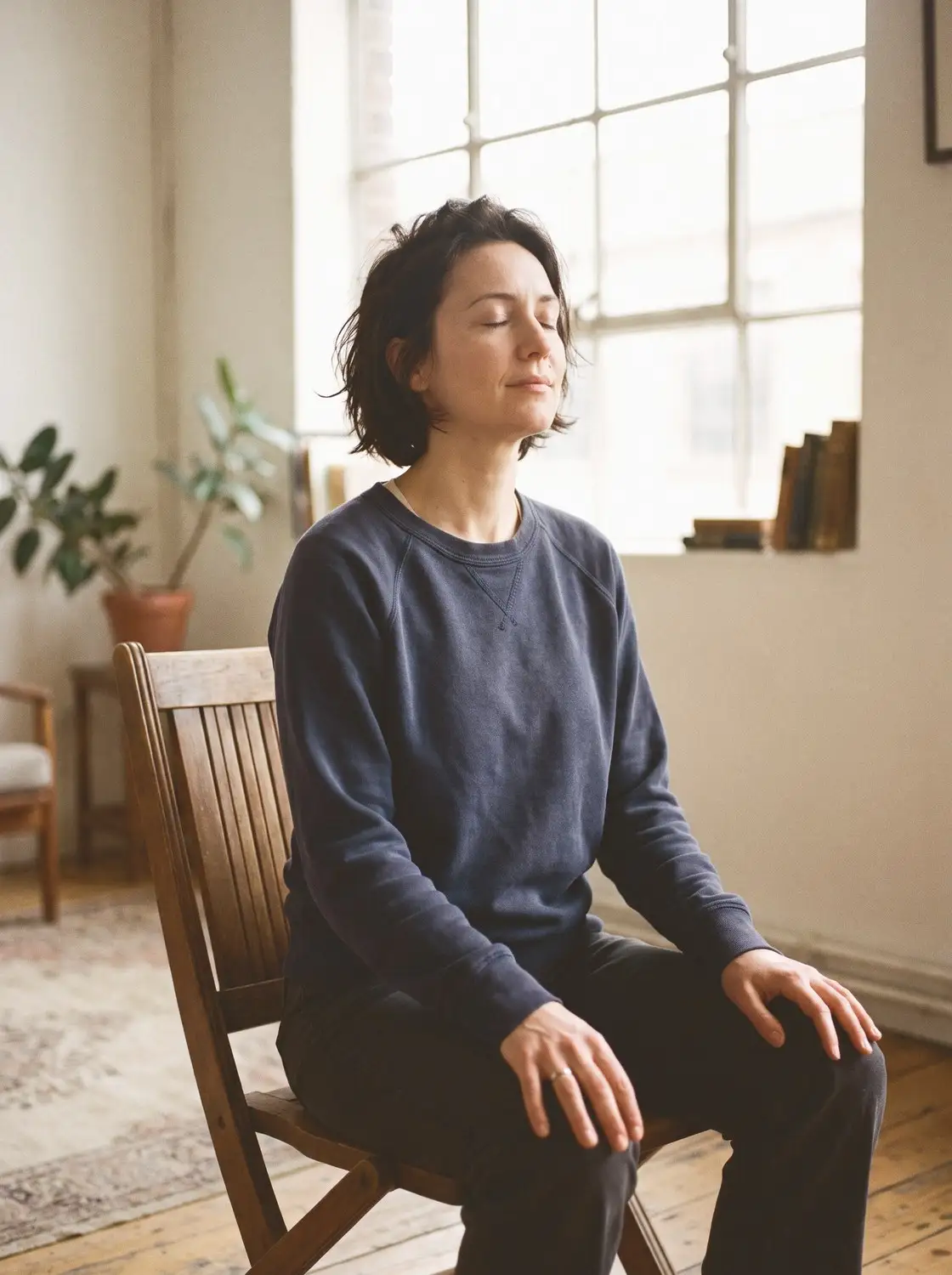
What is CO2 tolerance?
Your urge to breathe comes mostly from carbon dioxide, not from a lack of oxygen. As carbon dioxide builds up in your blood, sensors in your brainstem push you to take the next breath. CO2 tolerance is a popular name for how strongly you feel that push, and how calmly you can let it build before you answer it. The idea runs through the Buteyko method and Breath by James Nestor.
The idea comes from the Buteyko method, which holds that many people habitually over-breathe and keep their carbon dioxide too low. Breathwork apps and sports coaches have since turned it into something to test and train. You’ll see it called CO2 tolerance, air hunger tolerance or breathing efficiency. None of these names has a fixed scientific meaning.
What is the BOLT score?
BOLT stands for Body Oxygen Level Test, a name used by Patrick McKeown’s Oxygen Advantage programme. It’s the same as the Buteyko method’s control pause. Sitting at rest, you breathe out normally through your nose, pinch your nose and count the seconds until your first clear urge to breathe, such as a swallow or a twitch in your throat or belly. It’s not a test of how long you can hold on, and the next breath should be calm.
We describe the test so you know what people mean by it; we don’t coach it. If you try it, do it seated, on dry land, and stop at the first urge.

What is a good BOLT score?
Nobody knows, because no study has set norms. Coaching sites each give their own bands: one calls 40 seconds ideal, others call 20 average or 30 excellent. The bands don’t agree because they aren’t based on data.
When researchers have put BOLT to the test, it hasn’t tracked what it’s said to measure:
- Carbon dioxide. In 83 adults, breath-holding time measured the Buteyko way didn’t predict resting carbon dioxide. If anything, longer holds went with slightly lower carbon dioxide, the opposite of Buteyko’s claim (Courtney and Cohen 2008).
- Fitness. In 49 elite speed skaters, BOLT scores showed no link with exercise test results, and the authors noted it “has not yet been scientifically validated” (Kowalski et al. 2024). In 28 active students, BOLT wasn’t linked to aerobic fitness either (Marko et al. 2026).
What a score may reflect is your breathing habits and how you respond to the urge to breathe. Courtney and Cohen found shorter holds went with chest-led breathing in people whose lung-function tests were abnormal. So treat it, at most, as a rough personal trend, not a grade.
Is CO2 tolerance linked to anxiety?
Partly, and mostly for panic. A 2026 review of 22 studies with 1,263 adults found that people with anxiety disorders had shorter maximum breath-hold times, an effect driven by panic disorder. Links with everyday anxiousness were small and not significant (Puigcerver and Serrano 2026). In an earlier study, people with panic disorder held their breath for a shorter time than both people with social anxiety and healthy volunteers (Asmundson and Stein 1994).
That tells you breath-hold time can differ in people who panic. It doesn’t tell you that training longer holds treats anxiety.
Does CO2 tolerance training work?
We found no trial testing breath-hold “CO2 tolerance training” for anxiety or general health. The closest research is in panic disorder. In one randomised trial of 37 people, breathing therapy that used a carbon dioxide monitor to help people raise their carbon dioxide improved panic symptoms, compared with waiting for treatment (Meuret et al. 2008).
Then came a twist. In a trial of 74 people with panic disorder, one group trained to raise their carbon dioxide and another trained to lower it. Both improved by similar, large amounts (Kim et al. 2012). The authors concluded that what helped was common to both, not the carbon dioxide itself: perhaps regular, slow breathing, facing uncomfortable sensations and changed expectations.
So: the evidence points to calm, regular breathing, not to carbon dioxide targets or longer holds.
How well each breath is studied
- Box breathingSome evidence
- 4-7-8 breathingEarly research or tradition
Every study on this page (10)
- Courtney and Cohen, 2008: In 83 adults, breath-holding time measured the Buteyko way was negatively correlated with end-tidal carbon dioxide (r = −0.24), the opposite of Buteyko’s claim, and did not predict resting carbon dioxide.
- Kowalski et al., 2024: In 49 elite speed skaters, BOLT scores showed no significant correlation with standard exercise test results; the authors note BOLT has not been scientifically validated.
- Marko et al., 2026: In 28 active university students, BOLT was not significantly associated with maximal oxygen uptake, endurance time or weekly exercise.
- Puigcerver and Serrano, 2026: A meta-analysis of 22 studies (1,263 adults) found shorter maximal breath-hold times in anxiety disorders, driven by panic disorder, with marginal, non-significant links to trait anxiety.
- Asmundson and Stein, 1994: People with panic disorder held their breath for a significantly shorter time than people with social phobia or healthy volunteers.
- Meuret et al., 2008: In a randomised trial of 37 people with panic disorder, capnometry-assisted breathing therapy to raise carbon dioxide improved panic severity compared with delayed treatment.
- Kim et al., 2012: In a randomised trial of 74 people with panic disorder, breathing training to raise carbon dioxide and training to lower it both reduced panic severity, so improvement depended on elements common to both rather than on carbon dioxide itself.
- McAllister et al., 2026: In 66 adults facing a stress test, box breathing or a long out-breath beforehand softened the rise in heart rate and anxiety.
- Marchant et al., 2025: In 84 students, six breaths a minute raised heart-rhythm signs of calm modestly more than box or 4-7-8 breathing; none changed mood.
- Byrne et al., 2026: In a 32-person pilot, adding a hold after breathing in lowered a stress hormone more than plain slow breathing; neither changed mood.
Why doesn’t Breathform train breath holds?
Because the calm seems to come from slow, regular breathing, not from the hold. A comfortable pause after a normal breath, sitting down, is mild for most people. Long or repeated maximal holds are a different matter, especially after fast, hard breathing, and so is any hold in or near water, where blacking out can happen without warning. Some breathwork methods build on exactly that mix of fast breathing and long holds. We describe those methods in types of breathwork, but we don’t teach them.
If holds make you anxious, that’s useful information, not a weakness to train away. Plenty of good breathing has no holds at all: Ease, Unwind, Hum and Ground in  Breathform are four, and all of them are free.
What to do instead
If you’d like steadier breathing, practise breathing slowly with short, comfortable pauses. Box breathing has 4-second holds you can shorten to 2. In one trial, 5 minutes of it before a stressful test blunted the rise in heart rate and anxiety (McAllister et al. 2026).
If holds feel like too much, drop them. In a head-to-head lab test, plain breathing at 6 breaths a minute, with no holds, raised heart rate variability more than box breathing or 4-7-8 (Marchant et al. 2025). And in one small trial, a 4-second hold lowered cortisol a little more but also lowered one heart-rate-variability measure (Byrne et al. 2026): holds aren’t simply better. More on what the slower pace does in the benefits of slow breathing.
The gentle core of Buteyko, quiet breathing through your nose, is covered in Buteyko breathing. For a long, slow out-breath with one longer hold, try 4-7-8 breathing, and if you tend to over-breathe when anxious, how to stop hyperventilating is the place to start.
Questions people ask
What is the difference between the BOLT score and the control pause?
They’re the same test with different names. The control pause comes from the Buteyko method; the BOLT score (Body Oxygen Level Test) is the name Patrick McKeown uses in his Oxygen Advantage programme. Both time how long you can comfortably pause after a normal breath out, until the first urge to breathe. Neither has been scientifically validated as a health measure.
How long should you be able to hold your breath?
There’s no healthy target to aim for. How long you can hold your breath depends on your lung size, fitness, practice and how you handle the urge to breathe. Pushing for longer holds isn’t a health goal, and holding on after the urge gets strong only makes the next breath harder to take calmly.
Does a low BOLT score mean I over-breathe?
Not necessarily. The idea comes from Buteyko’s theory that a short pause means low carbon dioxide, but when researchers measured it, breath-hold time didn’t predict resting carbon dioxide levels. A low score may reflect habits, stress or how strongly you feel the urge to breathe. Gentle, quiet nose breathing is worth having whatever your score.
Can you increase your CO2 tolerance?
The urge to breathe does become easier to sit with when you practise slow, quiet breathing, and breath-hold times often grow with practice. Whether that improves your health is another question, and it hasn’t been shown. If your aim is to feel calmer, slow breathing with short or no holds gets you there without straining.
Practices in this guide
Read next
Technique · 6 min
Buteyko breathingTechnique · 8 min
Box breathing (square breathing)Technique · 7 min
4-7-8 breathing (the relaxing breath)Guide · 5 min
How to stop hyperventilatingQuestions · 6 min
Types of breathwork, from gentle to intense
More in Learn
Side by side · 6 min
Best breathing techniques: one honest tableLong read · 9 min
How to breathe properlyQuestions · 5 min
Breathing exercises for beginnersQuestions · 5 min
Why does deep breathing make me dizzy?Questions · 6 min
What is breathwork?Side by side · 5 min
Box breathing vs 4-7-8: which to use whenSide by side · 6 min
Nose breathing vs mouth breathing: what the evidence saysSide by side · 5 min
Chest breathing vs belly breathing: where your breath goes
Breathe gently, never strain, and stop if you feel dizzy, light-headed or short of breath.