GuideBody5 min
How to lower heart rate quickly
Your heart speeds up a little every time you breathe in and slows every time you breathe out. To bring a racing heart down, give the slowing half more time: sit down, and breathe out for longer than you breathe in.
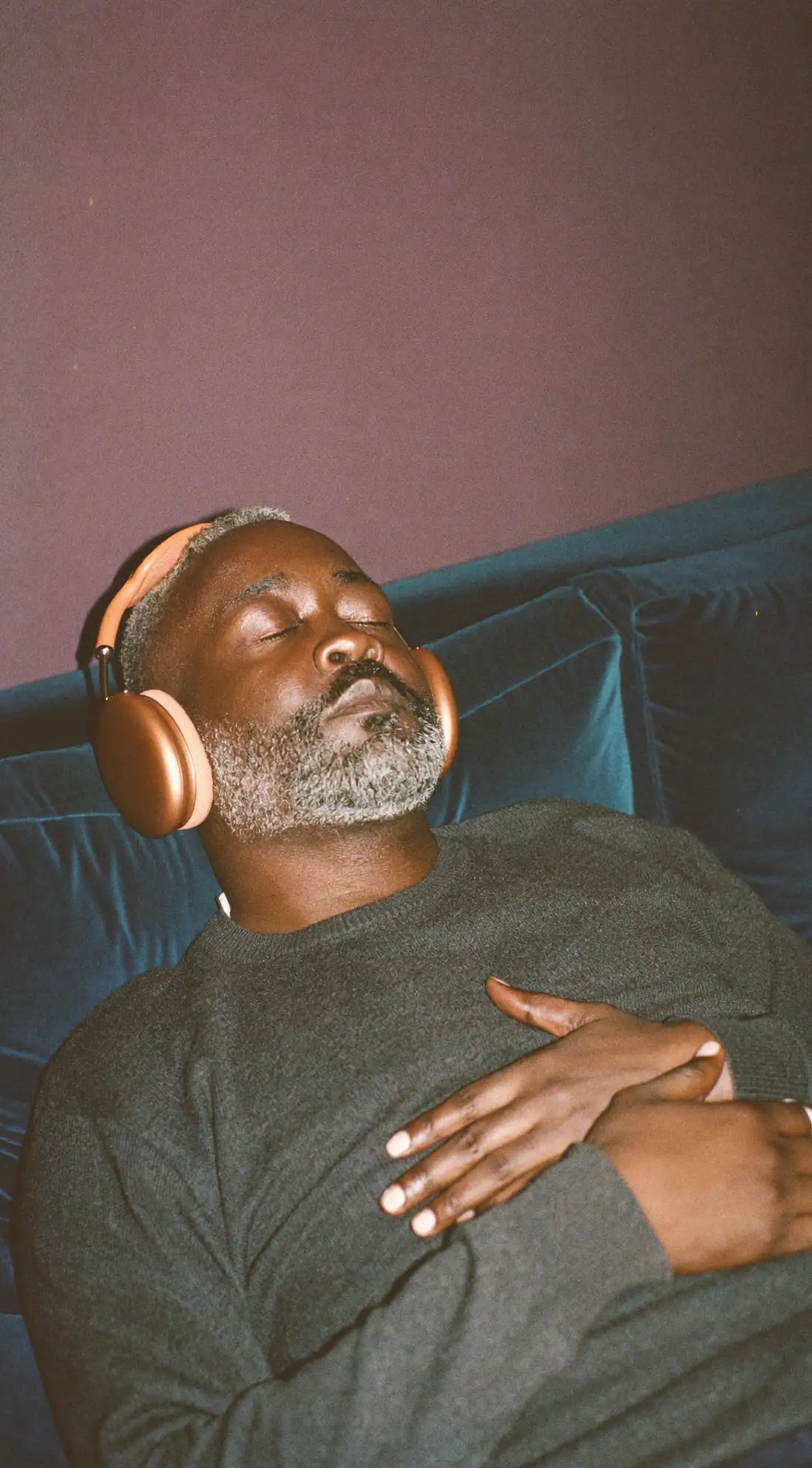
How to lower heart rate quickly, step by step
Wherever you are, start by taking the load off your heart, then slow the breath.
- Sit down or lie down. Let your back be supported and your shoulders drop.
- Breathe in quietly through your nose for 4 seconds. Let your belly widen first.
- Breathe out slowly for 6 seconds, through your nose or softly parted lips, as if fogging a window.
- Keep the breaths small. If you feel light-headed or tingly, breathe more gently, not more deeply.
- Carry on for 3 to 5 minutes. If 6 feels long, breathe out for 5. Slow and unhurried matters more than the exact count.
Why does breathing out slow your heart?
Your heart and breath are linked through the vagus nerve. As you breathe in, the nerve eases off and your heart speeds up a touch. As you breathe out, it brakes and your heart slows. Slow breathing makes these swings larger (Russo et al. 2017).
A longer out-breath gives the braking half more time on every round. In a small lab study, breathing 4 in and 6 out increased the heart’s rest-side activity, while quick breathing suppressed it, though the study couldn’t separate the long out-breath from the slow pace (Komori 2018). In a larger trial, one long, slow out-breath every 30 seconds, before and during a stressful test, blunted the usual rise in heart rate, compared with breathing normally (McAllister et al. 2026).
Does deep breathing lower your heart rate?
Slow breathing does. Deep breathing can, as long as it isn’t big. A huge gulp of air, done fast and often, is over-breathing: it can make you light-headed and your heart can feel faster, not slower. Think of the advice as “slower, not bigger”. A comfortable, quiet breath at a slow pace is all it takes.
After the popular 4-7-8 breath, heart rate fell in one small study, though there was no comparison group, so sitting still may explain some of it (Vierra et al. 2022). Nothing suggests it beats plainer slow breathing, and 4-6 is easier to keep up.
How long does it take to lower your heart rate with breathing?
You’ll often feel a change within a minute or two, because the slowing starts on the first long out-breath. The bigger drop builds over a few minutes as you keep going. In one study, a single 5-minute session of slow breathing with a long out-breath was followed by lower anxiety and more rest-side activity in heart rhythm (Magnon et al. 2021). Expect a few beats a minute, not a dramatic plunge, and that’s fine.
What else helps right now?
If something has just made your heart leap, two quick moves pair well with the breath.
A physiological sigh. Two breaths in through the nose, then one long, slow breath out. Three of these take the edge off a spike before you settle into 4-6 breathing.
Something cold. In a lab study of 61 adults, a cold pad on the side of the neck slowed the heart slightly (Jungmann et al. 2018). A cold, wet cloth on the side of your neck is the home version.
What’s a normal resting heart rate?
For most adults, between 60 and 100 beats a minute when sitting quietly. Fit people often sit lower, and your heart rate rises naturally with movement, heat, caffeine, excitement and nerves. A fast heartbeat after climbing the stairs or before a big moment is your body doing its job, and the breath above helps it come back down. Before a big moment,  Breathform on Apple Watch can lead that breath with a tap on your wrist.
If a racing heart comes with chest pain, fainting or breathlessness, get medical help rather than breathing through it. For the everyday kind, a slow out-breath is the most direct thing you can do. To make it a habit, there’s 4-6 breathing, and for the wider picture, how to calm your nervous system. Blood pressure responds to the same slow pace: see breathing exercises to lower blood pressure.
Every study on this page (8)
- Russo et al., 2017: An overview of research in healthy people suggests slow breathing affects the heart, lungs and nervous system; more study is needed.
- Komori, 2018: In 10 young men, breathing in for 4 seconds and out for 6 raised heart-rhythm signs of calm; rapid breathing lowered them.
- McAllister et al., 2026: In 66 adults facing a stress test, box breathing or a long out-breath beforehand softened the rise in heart rate and anxiety.
- Vierra et al., 2022: In 43 healthy young adults, heart rate and blood pressure dipped straight after 4-7-8 breathing, though quiet rest may partly explain it.
- Magnon et al., 2021: In 47 younger and older adults, anxiety was lower after one five-minute slow-breathing session, though the study had no comparison group.
- Jungmann et al., 2018: In a randomised within-participant lab study of 61 healthy adults, brief cold stimulation on the side of the neck lowered heart rate and raised heart rate variability (RMSSD) compared with a no-cold control.
- Kasap & Aydin, 2025: In 40 active students recovering from hard cycling, box breathing left heart rate and felt effort higher than six breaths a minute.
- Appelboam et al., 2015: In the REVERT randomised trial (428 adults with supraventricular tachycardia in English emergency departments), a modified Valsalva manoeuvre with supine repositioning and leg raise restored sinus rhythm in 43% versus 17% with the standard manoeuvre.
Questions people ask
What are vagal manoeuvres?
They’re techniques doctors use to stop a particular fast heart rhythm called SVT, such as straining hard for 15 seconds as if bearing down. In a trial of 428 people in emergency departments, a modified version with the legs raised straight afterwards restored a normal rhythm in 43%, against 17% for the standard one (Appelboam et al. 201561485-4)). They’re for a diagnosed rhythm problem, taught by your care team.
Is box breathing good for lowering heart rate?
It can help before something stressful. In one trial, 5 minutes of box breathing blunted the rise in heart rate during a stressful test, as did a long, slow out-breath every 30 seconds (McAllister et al. 2026). After hard exercise, though, breathing 5 in and 5 out kept heart rate lower and felt easier than box breathing in another study.
Can anxiety make your heart race?
Yes. Anxiety switches on the fight-or-flight response, which speeds up your heart and your breathing together. It feels alarming, but on its own a fast heartbeat from anxiety isn’t dangerous, and it settles as the feeling passes. Slow breathing helps both at once. If it comes in sudden waves, breathing exercises for panic attacks has a breath for that moment.
Does lying down lower your heart rate?
Usually, a little. Standing makes your heart work harder to move blood upwards, so sitting or lying down takes some of the load off. Lying down also makes slow belly breathing easier. Get up slowly afterwards: stand in stages, sitting on the edge of the bed or chair for a moment first.
Practices in this guide
Read next
Long read · 10 min
How to calm your nervous systemTechnique · 5 min
4-6 breathing (a longer exhale)Guide · 6 min
Breathing exercises to lower blood pressureResearch · 6 min
How to activate your parasympathetic nervous systemGuide · 4 min
Breathing exercises for panic attacks
More in Body
Guide · 5 min
Tight chest anxiety: a breath that loosens itGuide · 5 min
Air hunger anxiety: when you can’t get a full breathGuide · 6 min
Vagus nerve reset: what breathing can (and can’t) doGuide · 5 min
How to improve HRV with breathingQuestions · 6 min
What is HRV, and what’s a good HRV?Guide · 4 min
Breathing exercises for nauseaGuide · 5 min
Breathing exercises for pain and headachesGuide · 5 min
Breathing exercises for GERD (acid reflux)
Breathe gently, never strain, and stop if you feel dizzy, light-headed or short of breath.