GuideBody6 min
Breathing exercises to lower blood pressure
Breathing exercises to lower blood pressure won’t replace your tablets, but they’re one of the few things you can do in 5 minutes a day that measurably nudges blood pressure down. The key is the pace: about 6 breaths a minute, most days, for weeks.
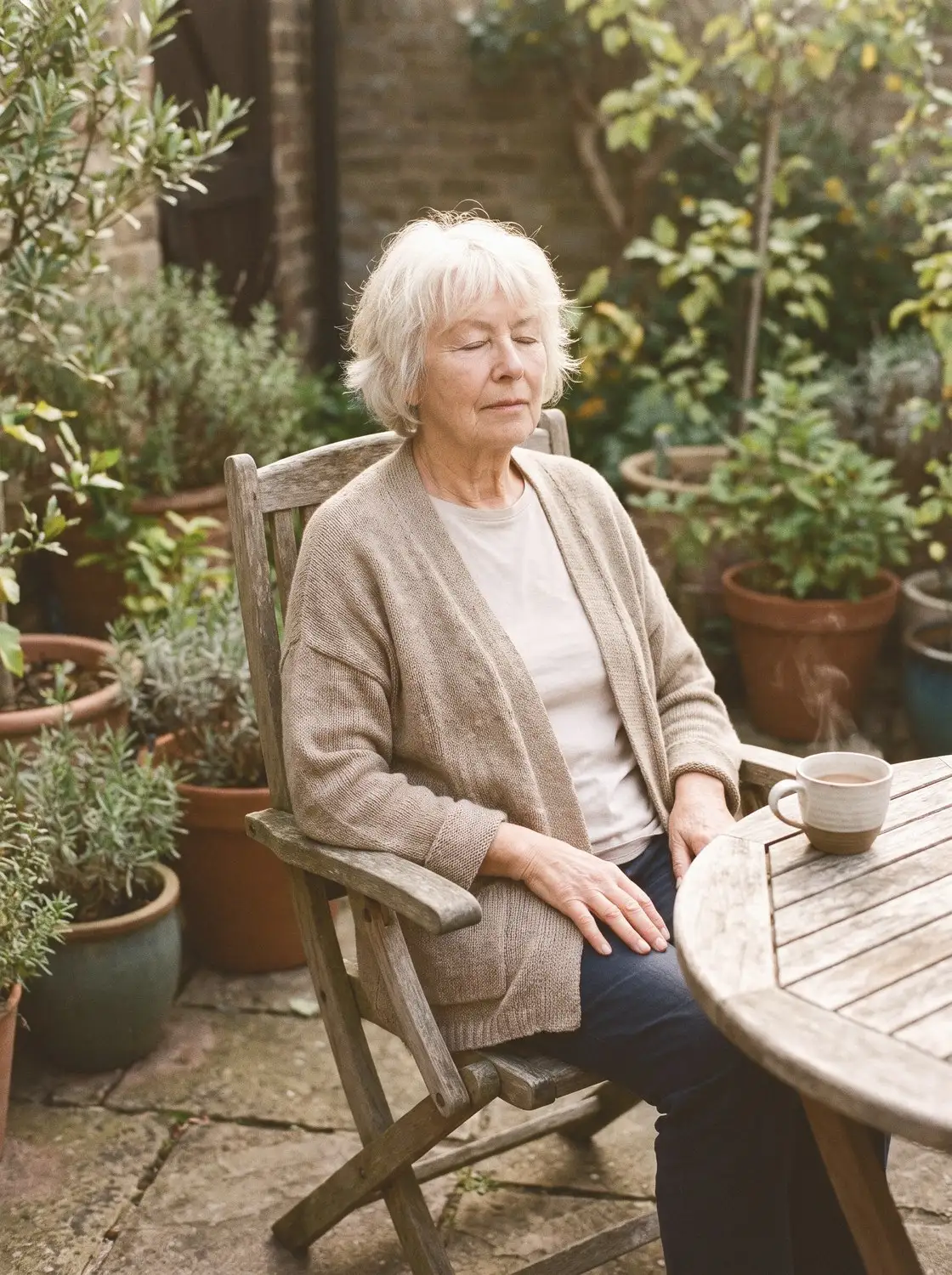
Can breathing exercises lower blood pressure?
Yes, modestly, with regular practice. The best summary comes from a 2019 review that pooled 17 randomised studies of people with high or borderline-high blood pressure. Everyone breathed at 10 breaths a minute or slower, for at least 5 minutes, on at least 3 days a week, for 4 weeks or longer. On average, systolic blood pressure (the top number) fell by about 5.6 mmHg and diastolic (the bottom number) by about 3 mmHg (Chaddha et al. 2019).
That’s a modest change. Results varied widely between studies, and everyone in them started with raised blood pressure, so the effect may be smaller if yours is already normal.
How to do breathing exercises to lower blood pressure
The trials used slow breathing, under 10 breaths a minute, often paced by a device. Your phone can do the pacing:  Breathform keeps 5 in, 5 out with a soft tone at each turn. The version here is simple: slow and even, about 6 breaths a minute, with no holds.
- Sit comfortably, back supported, feet flat, hands resting in your lap. The same position you’d use for a reading.
- Breathe in gently through your nose for 5 seconds. Let your belly widen before your chest.
- Breathe out for 5 seconds, smooth and unhurried, through your nose or softly parted lips.
- Keep it soft. Slow matters more than deep. If you feel light-headed, make the breaths smaller.
- Do 5 to 15 minutes a day, on most days. That’s roughly what the studies used: regular practice, for weeks.
Prefer longer breaths? 6 in and 6 out is 5 breaths a minute, still well inside the range the trials used.
| Pattern | The count | One round | Pace | 30 rounds |
|---|---|---|---|---|
| 5-5 · default | In 5 · out 5 | 10 s | 6 breaths a minute | 5:00 |
| 6-6 | In 6 · out 6 | 12 s | 5 breaths a minute | 6:00 |
| 4-6 | In 4 · out 6 | 10 s | 6 breaths a minute | 5:00 |
How much can breathing lower blood pressure?
About 5.6 mmHg systolic and 3 mmHg diastolic on average, in people who started with raised blood pressure and practised for at least a month (Chaddha et al. 2019). Some people will see more, some less, some none.
You may have read headlines saying daily breathing lowers blood pressure “as much as medication”. Those mostly come from a different kind of exercise: breathing in hard against a resistance device, like weight training for the breathing muscles. In one trial, 36 adults aged 50 to 79 did 30 of these breaths a day, 6 days a week, for 6 weeks. Their systolic blood pressure fell from 135 to 126 mmHg, and it didn’t change with a sham device (Craighead et al. 2021). It’s promising and it uses special equipment, but it isn’t the same as the calm, slow breathing on this page.
Which breathing exercise is best for high blood pressure?
Slow, steady breathing has the most research. A few others come up often:
- Alternate nostril breathing. Trials of this yoga breath found bigger drops than doing nothing, but the results varied so much that the reviewers urge caution (Nam et al. 2024). One lab study suggests most of its effect on heart rhythm comes from the slow pace itself (Ghiya & Lee 2012). Our guide: alternate nostril breathing.
- Nose breathing. In a small trial, breathing only through the nose at rest was linked to lower diastolic blood pressure than mouth breathing (Watso et al. 2023). It’s a sensible default.
- 4-7-8 and box breathing. Neither meaningfully changed blood pressure in a single session in a lab test of 84 students (Marchant et al. 2025). Long holds aren’t needed.
If you’d like to try the alternating rhythm, this player guides an even 4 in, 4 out. Switch nostrils if you like, or simply breathe evenly:
What does the research say?
The anchor is the 2019 review of 17 randomised studies in people with raised blood pressure. Regular slow breathing lowered it on average, but results varied widely from study to study (Chaddha et al. 2019). Trials of alternate nostril breathing point the same way but differ even more (Nam et al. 2024).
Single sessions are less consistent. In a lab test of four slow patterns, none meaningfully changed blood pressure in one go (Marchant et al. 2025).
So: regular slow breathing is linked to modest, real drops in blood pressure over weeks. One-off sessions show smaller, patchier effects.
How well each breath is studied
- Coherent breathingWell studied
- Slow breathing (6-6)Some evidence
- Alternate nostril breathingSome evidence
Every study on this page (8)
- Chaddha et al., 2019: Across 17 trials in people with high or borderline-high blood pressure, regular slow breathing modestly lowered blood pressure, though results varied.
- Craighead et al., 2021: In a double-blind randomised sham-controlled trial, 36 adults aged 50–79 with systolic blood pressure of 120 mmHg or more did 6 weeks of high-resistance inspiratory muscle strength training (30 breaths a day, 6 days a week); casual systolic blood pressure fell from 135 to 126 mmHg, with no change after sham training.
- Nam et al., 2024: Alternate-nostril breathing was linked with lower blood pressure across six trials, but results varied so widely that the authors urge caution.
- Ghiya & Lee, 2012: In 20 adults new to yoga breathing, alternate-nostril breathing affected heart rhythm much like plain slow breathing; the slow pace seemed key.
- Watso et al., 2023: In 20 young adults, breathing through the nose rather than the mouth slightly lowered blood pressure and raised heart-rhythm signs of calm.
- Marchant et al., 2025: In 84 students, six breaths a minute raised heart-rhythm signs of calm modestly more than box or 4-7-8 breathing; none changed mood.
- Steffen et al., 2017: One 15-minute session at about six breaths a minute lifted mood and kept blood pressure lower under stress in 95 students.
- Vierra et al., 2022: In 43 healthy young adults, heart rate and blood pressure dipped straight after 4-7-8 breathing, though quiet rest may partly explain it.
How long does it take for breathing to lower blood pressure?
In the trials, weeks: everyone practised for at least 4 weeks (Chaddha et al. 2019). A single session can help under pressure, though. In one study, students who breathed at their own slow, resonance pace for 15 minutes had lower systolic blood pressure during a stressful maths task than students who sat quietly (Steffen et al. 2017). There’s more on the slower, rest side of your body in how to calm your nervous system.
A good test is your own home monitor. Measure at the same times each week, before your practice. Then look at the average over a month rather than single readings.
Should I breathe slowly before a blood pressure reading?
Breathe calmly and normally. A reading is meant to capture your usual resting blood pressure, so the standard advice is to sit quietly for a few minutes first (back supported, feet flat, arm resting) and not to talk while the cuff inflates. Easy, ordinary breathing fits that. Holding your breath or doing a special exercise just before the cuff doesn’t, because it can make the number less representative of your day.
Five slow minutes a day won’t transform a reading overnight. Over months, it’s one of the gentlest things you can add.
The same slow pace helps lower your heart rate too. For the bigger picture, see the benefits of slow breathing.
Questions people ask
Can breathing replace blood pressure medication?
It works alongside it, not instead. The drops linked to slow breathing are modest, about 5.6 mmHg systolic on average, and they varied a lot between studies. If you take medicine for blood pressure, keep taking it as prescribed. Tell your doctor you’re practising: if your home readings come down over time, they can review your treatment with you.
Does 4-7-8 breathing lower blood pressure?
Possibly a little, in the moment. In one small study, systolic blood pressure fell after 4-7-8 breathing, but there was no comparison group (Vierra et al. 2022). In a lab test of 84 students, none of four slow patterns, 4-7-8 included, meaningfully changed blood pressure in a single session. For a lasting effect, regular slow breathing is what’s been studied.
Does deep breathing lower blood pressure immediately?
Sometimes, by a small amount, but don’t expect a big drop in one go. The benefit in the research comes from slow breathing practised regularly for at least 4 weeks. Single sessions have shown small effects in some studies and none in others. Keep each breath slow and comfortable rather than big, so you don’t feel light-headed.
What’s the best time of day to do it?
Whenever you’ll do it most days. Many people like the morning, before the day gets going, or the evening, as part of winding down. The trials in the main review all asked for regular practice: at least 5 minutes, at least 3 days a week, for a month or more. A fixed slot makes that easy.
Practices in this guide
Read next
Guide · 5 min
How to lower heart rate quicklyTechnique · 6 min
Alternate nostril breathing (nadi shodhana)Technique · 6 min
Coherent breathing (resonance breathing)Technique · 5 min
Slow breathing exerciseResearch · 10 min
Slow breathing benefits: what it does to your body
More in Body
Guide · 5 min
Tight chest anxiety: a breath that loosens itGuide · 5 min
Air hunger anxiety: when you can’t get a full breathLong read · 10 min
How to calm your nervous systemGuide · 6 min
Vagus nerve reset: what breathing can (and can’t) doGuide · 5 min
How to improve HRV with breathingQuestions · 6 min
What is HRV, and what’s a good HRV?Research · 6 min
How to activate your parasympathetic nervous systemGuide · 4 min
Breathing exercises for nausea
Breathe gently, never strain, and stop if you feel dizzy, light-headed or short of breath.